IEEE IMAS 2026 Invited Speakers
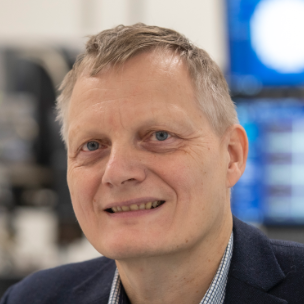
Univ.-Prof. Dr. Wolfgang Bösch
Click to view short bio
Wolfgang Bösch is a Fellow of IEEE and IET. He received his Dipl.-Ing. degree from the Technical University of Vienna, Austria, in 1985, his Ph.D. degree from Graz University of Technology in 1988, and his M.B.A. from the University of Bradford, United Kingdom, in 2004.
In 2010, he joined Graz University of Technology to establish the Institute of Microwave and Photonic Engineering. His research focuses on microwave component design and characterization, wave propagation, RFID, communication systems, and radar technologies.
He served for nine years as Dean of the Faculty of Electrical and Information Engineering at Graz University of Technology, overseeing the strategic development, budget, and personnel of thirteen institutes and twenty full professors.
Prior to joining academia, he held several senior industrial positions, including Chief Technology Officer of the Advanced Digital Institute (UK), Director of Business and Technology Integration at RFMD (UK), and CTO of Filtronic Integrated Products.
Earlier in his career, he worked with the European Space Agency (ESA), MPR-Teltech (Canada), M/A-COM (USA), and DaimlerChrysler Aerospace (now Hensoldt), contributing to microwave circuits, MMIC technologies, power amplifiers, and airborne radar systems.
Prof. Bösch has published more than 200 scientific papers and holds four patents in the fields of microwave engineering and wireless communications.
Professor of Microwave and Photonic Engineering
Graz University of Technology, Austria
The Future is Wireless
Click to view abstract
The rapid growth of wireless connectivity is expected to reach nearly 500 billion connected devices by 2030, driving unprecedented demands on communication technologies for applications such as smart homes, healthcare, autonomous vehicles, smart grids, and space exploration.
This talk discusses the technological challenges facing future 5G and 6G microwave front-end systems, including higher operating frequencies, greater integration, miniaturization, and lower power consumption.
Emerging microwave front-end technologies will be presented, highlighting innovative passive components such as filtering antennas (filtennas), advanced antenna and filter designs, and the application of metamaterials to achieve enhanced functionality within compact devices.
The presentation also introduces new characterization and calibration techniques that provide measurement error estimation, supporting the development of highly integrated microwave systems.
Finally, examples of optimized front-end amplifier designs and heterogeneous integration using embedded GaN devices will demonstrate future directions in high-performance wireless hardware.

Dr. Muhammad Zubair
Click to view short bio
Dr. Muhammad Zubair received his Ph.D. in Electronic Engineering from Politecnico di Torino, Italy, followed by postdoctoral research at the SUTD-MIT International Design Centre in Singapore.
Prior to joining the University of Leicester, he held academic and research appointments at the University of Glasgow, King Abdullah University of Science and Technology (KAUST), Information Technology University (ITU), Lahore, and the Singapore University of Technology and Design (SUTD).
His research focuses on applied electromagnetics, metamaterials, and metasurface engineering, combining computational modelling, artificial intelligence, and advanced electromagnetic design to develop next-generation technologies for wireless communications, sensing and imaging, including healthcare applications, and sustainable energy systems.
His work spans radio-frequency to optical frequencies, bridging fundamental electromagnetic theory with practical engineering applications.
Dr. Zubair has contributed as PI, Co-PI, or Research Co-Lead to projects funded by organizations including UKAEA, EPSRC, the Qatar National Research Fund, the British Council, HEC Pakistan, PHEC Pakistan, Singapore Temasek Laboratories, and the US Department of Defense.
He has published over 200 peer-reviewed research articles and book chapters and has been recognized among the Stanford–Elsevier World’s Top 2% Most-Cited Scientists since 2022.
His contributions have received several international honors, including the IEEE Antennas and Propagation Society Young Professional of the Year Award, URSI Young Scientist Award, RSC Materials Horizons Emerging Investigator recognition, Queen Elizabeth Prize for Engineering Ambassador recognition, and IEEE AP-S Young Professional Ambassador recognition.
He is a Senior Fellow of the Higher Education Academy (SFHEA), Senior Member of IEEE and Optica, and serves on the IEEE AP-S Technical Committee 11 on Sensing, Imaging, Health and Medicine.
Researcher in Applied Electromagnetics & Metasurface Engineering
University of Leicester, UK
Fluid-Reconfigurable Intelligent Surfaces (FRIS) for Optical Wireless Communications
Click to view abstract
Metasurfaces, planar arrays of subwavelength nanostructures, have emerged as transformative platforms for manipulating electromagnetic waves across radio, infrared, and optical domains.
Their ability to tailor amplitude, phase, and polarization has unlocked new paradigms for communication, imaging, and energy harvesting.
This talk presents an overview of recent advances in designer metasurfaces, demonstrating how ultrathin and reconfigurable meta-architectures can enable disruptive improvements in information transfer systems and radar-like sensing.
For next-generation communication, fluidic and dielectric metasurfaces have been explored to achieve reconfigurability and multifunctionality across optical frequencies.
A fluid-infiltrated metalens-driven reconfigurable intelligent surface (RIS) was demonstrated to achieve real-time focusing and dynamic beam control, enabling polarization-insensitive optical wireless communication links.
A fluid-induced reconfigurable polarization-insensitive metasurface was also developed, offering on-demand diffraction tuning independent of polarization state and operating across visible–infrared bands.
These architectures demonstrate the transition of RIS concepts from radio to optical regimes, providing compact, self-adaptive, and secure photonic communication interfaces.
Furthermore, a dual-band metasurface-based structured light generator was introduced for futuristic communication and sensing applications.
Collectively, these studies demonstrate how rationally engineered metasurfaces are converging toward a unified vision of intelligent, energy-efficient, and scalable systems.
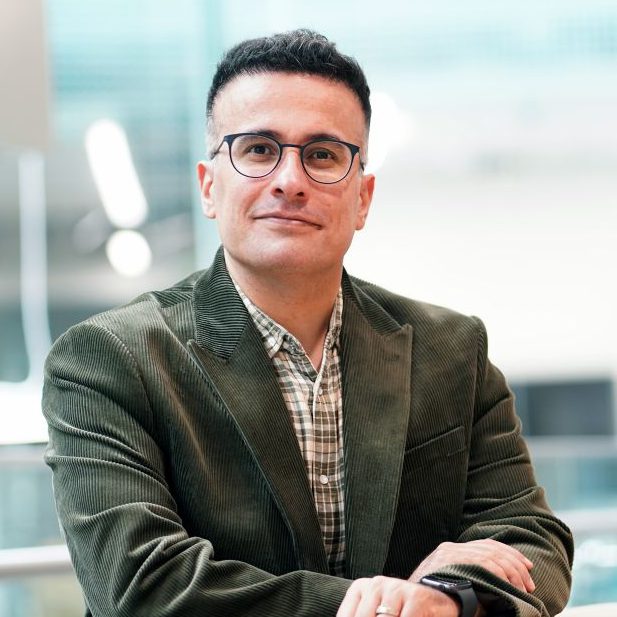
Prof. Hadi Heidari
Click to view short bio
He is the CTO and Co-founder of Neuranics, a deep-tech semiconductor company building next-generation magnetic sensors for wearable neural interfaces and consumer extended-reality applications.
His research spans integrated magnetic sensors, wearable biomedical microsystems, and human–machine interfaces, and he has led multiple EPSRC, Innovate UK, EU, and ARIA projects, authoring 300+ peer-reviewed publications.
He has received multiple awards, including the IET Healthcare Technologies JA Lodge Award and the IEEE Sensors Council Young Professional Award.
CTO of Neuranics
Wearable Magnetic Sensing Systems for Next-Generation Health Monitoring and Consumer Electronics
Click to view abstract
This talk discusses the emergence of wearable magnetic sensing as a transformative modality for next-generation health monitoring and consumer electronics, offering capabilities that complement the antenna-based wearable systems.
Recent advances from Neuranics, a deeptech company commercialising wearable magnetic sensors for healthcare and extended reality, are presented, with a focus on ultra-sensitive Tunnelling Magnetoresistance (TMR) sensors integrated with custom CMOS readout ASICs to detect the minute biomagnetic fields generated by the human heart and muscles, as sensed through clothing and skin.
The co-design of TMR stacks, low-noise front-end electronics, and noise-cancellation architectures is examined, through which magnetocardiography (MCG) and magnetomyography (MMG) can be enabled outside shielded environments, opening the door to continuous, body-worn cardiac and neuromuscular monitoring as well as natural human-machine interaction in consumer wearables and extended-reality (XR) devices.
Device-level characterisation, system-level integration into compact wristband and patch form factors, and early demonstrations of real-time signal acquisition on human subjects are also covered. The talk is concluded with a perspective on how wearable magnetic sensing systems are positioned within the broader landscape of consumer wearables and wireless health-monitoring platforms, and on the route toward scalable translation, including manufacturability, low-power readout, packaging, and seamless integration into consumer wearables.
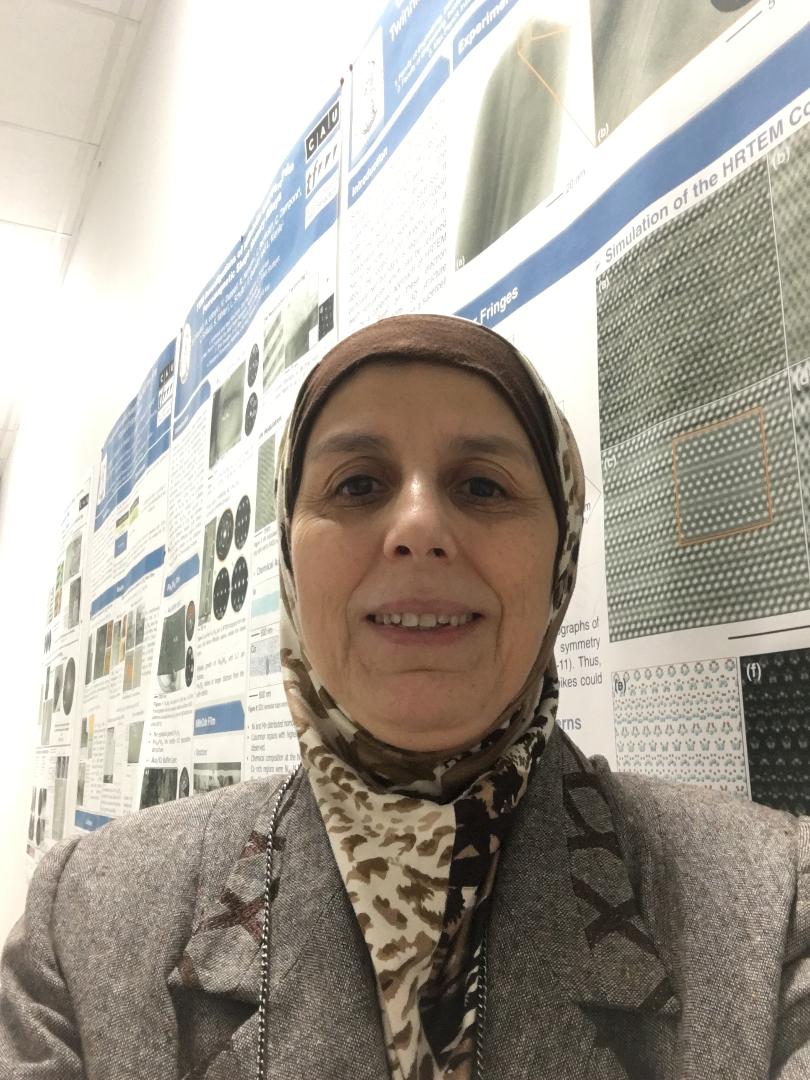
Distinguished Professor Dr. Hala J. El-Khozondar
Distinguished Professor
Department of Materials and London Centre for Nanotechnology,
Imperial College London, UK
Graphene-Enhanced Nonlinear Waveguide Sensors: Advances in Sensitivity and Tunable Optical Sensing
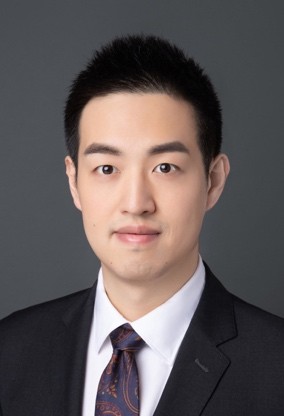
Prof. Chong Han
Click to view short bio
Chong Han received his Ph.D. degree from Georgia Institute of Technology, USA, in 2016.
He is currently the John Wu & Jane Sun Endowed Professor at Shanghai Jiao Tong University, China, and Director of the Terahertz Wireless Communications (TWC) Laboratory.
He has served as the Co-Founder and Vice-Chair of the IEEE Communications Society Special Interest Group (SIG) on Terahertz Communications since 2021.
Prof. Han received the 2024 IEEE ComSoc Radio Communications Committee (RCC) Early Achievement Award for his contributions to terahertz channels and communications.
His other honors include the 2024 Bessel Research Award from the Alexander von Humboldt Foundation in Germany and the 2023 IEEE ComSoc Asia-Pacific Outstanding Young Researcher Award.
He also serves as a (guest) editor for leading journals including IEEE Transactions on Wireless Communications and IEEE Journal on Selected Areas in Communications (JSAC).
John Wu & Jane Sun Endowed Professor
Shanghai Jiao Tong University, China
Kill Two Birds with One Stone: Exploring the Terahertz Band for Terabit-per-second Wireless Rates and Millimeter-level Sensing Accuracy
Click to view abstract
The Terahertz (THz) band holds enormous potential for supporting unprecedented wireless data rates and millimeter-level sensing accuracy thanks to its ultra-broad bandwidth.
Terahertz Integrated Sensing and Communication (ISAC) is viewed as a game-changing technology for realizing connected intelligence in 6G and beyond wireless systems.
This talk motivates the development of THz ISAC technologies and discusses state-of-the-art channel modeling, communication solutions, and enabling techniques.
Experimental results and system demonstrations will also be presented, highlighting the transformative capabilities of terahertz communications for future intelligent networks.

Dr. Felix Vega
Click to view short bio
Dr. Felix Vega is associated with the Technology Innovation Institute in Abu Dhabi, United Arab Emirates.
He serves as the Head of the Directed Energy Research Center at the Technology Innovation Institute.
The available IMAS 2026 source material identifies his institutional affiliation and leadership role, but does not provide a longer personal biography.
Head of the Directed Energy Research Center
Technology Innovation Institute, Abu Dhabi, UAE
Emerging Challenges and Opportunities in Electromagnetic Sensing and Imaging for Real-World Impact?
Click to view abstract
Growing interest in microwave and millimeter-wave sensing and imaging is driving research in scattering analysis, electromagnetic modeling, numerical techniques, and radar signal processing.
This special session addresses advanced research in electromagnetic sensing and imaging at microwave and millimeter-wave frequencies.
Topics include scattering analysis, near-field-to-far-field transformation, electromagnetic forward and inverse modeling, full-wave and hybrid numerical methods, image reconstruction, and radar signal processing.
Contributions are particularly encouraged on methodologies that link electromagnetic theory, antenna design, and propagation effects to experimentally validated sensing and imaging results.
The session connects the shared interests of IEEE AP-S and IEEE MTT-S in antennas, propagation, and microwave/mmWave sensing, highlighting recent advances in electromagnetic modeling, scattering analysis, numerical methods, and signal processing for sensing and imaging.
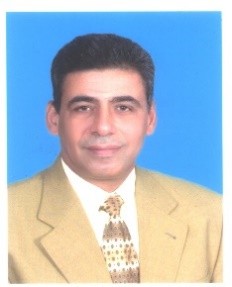
Prof. Allam
Click to view short bio
Prof. Allam is a Full Professor in the Faculty of Information Engineering and Technology (IET) at the German University in Cairo (GUC), Egypt.
He received his B.S. degree in Electrical Engineering from the Military Technical College (MTC), Egypt, in 1978, his M.S. degree from Cairo University in 1985, and his Ph.D. in Electrical Engineering from the University of Kent, United Kingdom, in 1988.
He began his professional career in the Egyptian Air Force before joining the Military Technical College as a researcher, lecturer, Associate Professor, and later Full Professor. He also served as Dean and Deputy Commandant of the Military Technical College.
After retiring from military academic service, he joined the German University in Cairo, where he served as both Dean and Vice Dean of the Faculty of Information Engineering and Technology.
His research interests include RF and microwave engineering, antenna design, smart antennas, vehicular radar systems, satellite communications, metamaterial absorbers, electromagnetic sensing, wireless power transfer, energy harvesting, and MIMO radar technologies.
He has published extensively in leading international journals and conferences and has actively participated in IEEE events worldwide. His recent work focuses on automotive radar systems, radar-absorbing materials, and advanced antenna technologies for biomedical and sensing applications.
Full Professor, Faculty of Information Engineering and Technology
German University in Cairo (GUC), Egypt
A Decade of Implantable and Wearable Antennas for Non-Invasive Cancer Diagnosis: From MICS-Band Implants to AI-Supported Textile Biosensors
Click to view abstract
Implantable and wearable antennas have become a promising platform for non-invasive and minimally invasive cancer screening and biomedical diagnosis. The sensing principle relies on the electromagnetic differences between healthy and malignant tissues, which affect antenna resonance characteristics and reflection coefficients.
This talk summarizes more than a decade of research (2013–2026) covering antenna-based biomedical sensing for the diagnosis of brain, kidney, breast, oral cavity, lung, and torso abnormalities.
It reviews the evolution of antenna technologies from narrowband MICS-band implantable antennas to ultra-wideband (UWB) antennas for deep-tissue sensing, and finally to flexible, tattoo, and textile-based wearable antennas designed for improved comfort and biomedical monitoring.
The presented research combines realistic breast tissue phantoms with machine-learning algorithms capable of distinguishing malignant from healthy tissue through differential S11 responses. Simulation results using CST Microwave Studio are validated through fabricated prototypes, tissue phantoms, and in vivo animal experiments.
The presentation highlights four major research themes:
- Narrowband implantable antennas for diagnosing brain, kidney, breast, oral, and torso abnormalities.
- Ultra-wideband antennas for brain stroke and lung cancer detection.
- Tissue-aware breast modeling and electromagnetic characterization.
- Flexible and wearable antenna platforms including LPIFA, tattoo, logarithmic-spiral, smartwatch, and Koch-fractal antenna designs.
The talk concludes by demonstrating how AI-assisted classification enhances antenna-based biomedical sensing, strengthening the integration of intelligent diagnostics with next-generation wearable antenna technologies.
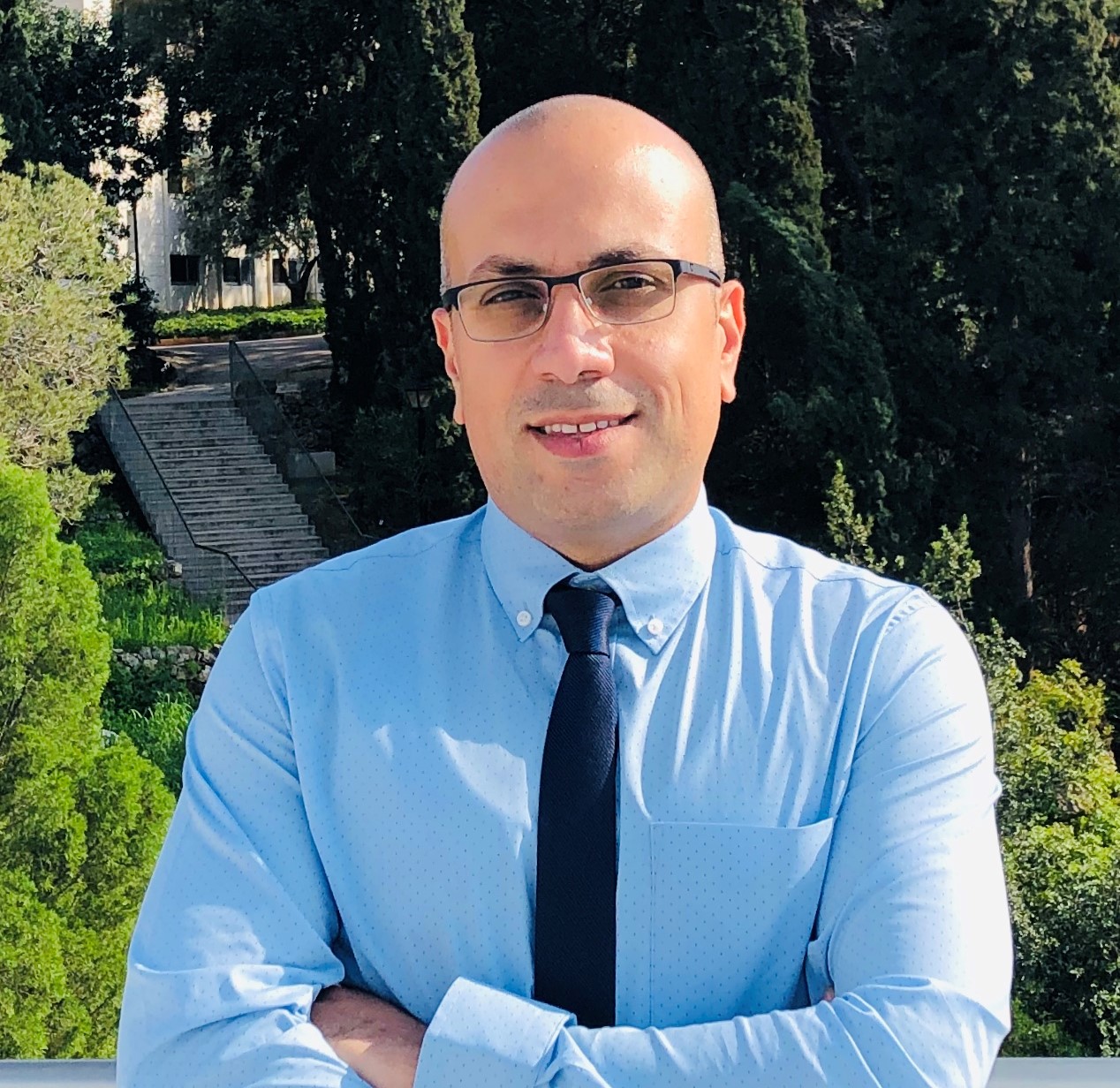
Dr. Joseph Costantine
Click to view short bio
Joseph Costantine is a Professor and Associate Chairperson in the Department of Electrical and Computer Engineering at the American University of Beirut (AUB).
He also serves as Associate Director of the Institute for Academic Innovation and Development and Director of the Qatar Scholarship–Education Above All Program.
He received the Ph.D. degree in Electrical Engineering from the University of New Mexico, Albuquerque, USA, in 2009, the M.E. degree from the American University of Beirut, and the B.E. degree from the Lebanese University.
Dr. Costantine leads research at the intersection of electromagnetics, wireless sensing, biomedical technologies, and intelligent communication systems.
As Principal Investigator of the EMpact Lab, he has advanced the development of reconfigurable and deployable antennas, RF energy harvesting systems, biomedical electromagnetic sensors, and wireless technologies for healthcare, space, and IoT applications.
His research has resulted in more than 180 journal and conference publications, two books, multiple book chapters, and 13 U.S. patents and patent applications.
His work has received international recognition, including the 2024 ASME Outstanding Contribution Award, multiple best paper and student paper awards, and several Science and Technology Innovation Awards.
He was selected as a World Economic Forum Young Scientist in 2020. He is a Senior Member of IEEE and serves as an Associate Editor of IEEE Transactions on Antennas and Propagation.
Professor & Associate Chairperson, Electrical and Computer Engineering
American University of Beirut (AUB), Lebanon
Antennas and RF Systems for Applications in Defense, Security, and Disaster Management
Click to view session details
This special session aims to bring together recent advances in antenna design, RF systems, and electromagnetic technologies tailored for applications in defense, security, and disaster management.
The technical scope includes reconfigurable and cognitive antenna systems, low-profile and conformal antennas, RF sensing and radar for through-obstacle detection such as search-and-rescue under rubble, RF energy harvesting and wireless power transfer for battery-less sensors, and secure and resilient communication systems.
The session also covers millimeter-wave and sub-THz technologies for high-resolution sensing and the integration of artificial intelligence with RF front-ends.
Applications addressing post-disaster scenarios, including ad hoc networks, localization, and biomedical monitoring, are also encouraged.
Prof. Dr. Diaa E. Fawzy
Click to view short bio
Prof. Dr. Diaa E. Fawzy (Member, IEEE) was born in Egypt in 1968. He received his Ph.D. from Heidelberg University, Germany, in 2001.
He participated in the German–European GSM-R project, where he was responsible for network planning and optimization for several years.
Since 2008, he has been with Izmir University of Economics, Türkiye, where he currently serves as Professor and Chair of the Department of Aerospace Engineering.
Prof. Fawzy is a reviewer for numerous international scientific journals, a member of IEEE, and the author of more than 100 international publications.
His research interests include microwave devices, computational electromagnetics, antenna design, millimeter-wave technologies, microwave engineering, remote sensing, and artificial intelligence.
Professor & Chair, Department of Aerospace Engineering
Izmir University of Economics, Türkiye
Metamaterial-Inspired Wideband Absorbers and Compact Antenna Designs for Next-Generation Wireless Communications
Click to view abstract
Metamaterials have become a promising technology for improving the performance of next-generation wireless communication systems.
This presentation summarizes recent research on the design and development of compact, wideband, and ultra-wideband metamaterial structures for 5G and millimeter-wave applications.
The work focuses on novel metamaterial absorbers and antenna configurations that provide enhanced bandwidth, high absorptivity, improved antenna gain, and reduced structural dimensions.
Innovative unit-cell geometries based on letter-shaped resonators and periodic metamaterial arrangements are introduced to generate multiple resonances and broaden the operational bandwidth. These structures are implemented on conventional dielectric substrates as well as textile materials for wearable electronics, energy harvesting, and smart communication systems.
Experimental and simulation results demonstrate significant improvements in electromagnetic performance, including efficient microwave absorption, wide reflection-loss bandwidths, and enhanced antenna characteristics, contributing to future 5G, 6G, and IoT technologies.
Dr. Mahrukh Khan
Click to view short bio
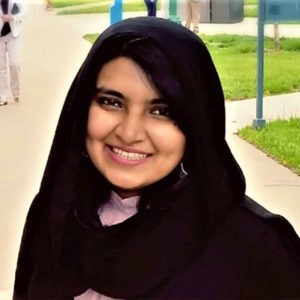
Mahrukh Khan is an Associate Professor in the Electrical and Computer Engineering Department at The College of New Jersey (TCNJ).
She is also the Director of the Microwave and Wireless Communication Lab at TCNJ.
She received her Bachelor of Science and Master of Science degrees in Electrical Engineering from the University of Engineering and Technology, Lahore, Pakistan, in 2007 and 2011, respectively.
Dr. Khan received her Ph.D. degree in Electrical Engineering from the University of Missouri–Kansas City, USA, in 2017.
Her research interests include antennas, microwave and wireless communications, RF and millimeter-wave systems, and emerging electromagnetic technologies.
She has published more than 30 articles and conference papers in renowned journals and peer-reviewed conferences.
Dr. Khan was selected as an IEEE AP-S Young Professional Ambassador in 2022. She is also involved in the IEEE AP-S Young Professional Committee and IEEE AP-S Technical Committee on Wireless Communications.
Associate Professor & Director of Microwave and Wireless Communication Lab
The College of New Jersey, USA
Women in Antennas, Microwaves, and Propagation: Emerging Research Trends and Applications
Click to view session details
This special session highlights emerging research contributions in antennas, microwaves, propagation, and applied electromagnetics led by women researchers from academia and industry worldwide.
The session provides a technical forum for showcasing innovative developments spanning RF, millimeter-wave, and THz technologies for next-generation wireless, sensing, biomedical, and vehicular applications.
Topics include wearable and flexible antennas for healthcare and telehealth systems, low-profile and reconfigurable antenna arrays, propagation and scattering studies at millimeter-wave and THz frequencies, THz transmission and shielding technologies, vehicular and MIMO antenna systems, electromagnetic characterization and modeling, and emerging RF sensing and biomedical propagation applications.
The session welcomes both theoretical and experimentally validated research that advances the state of the art in antenna and microwave engineering while promoting greater visibility and participation of women researchers within the IEEE AP-S and MTT-S communities.
Prof. Anwar Jarndal
Click to view short bio
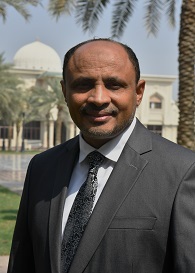
Anwar Jarndal (Senior Member, IEEE) received the Ph.D. degree in Electrical Engineering from the University of Kassel, Germany, in 2006, and completed postdoctoral research at École de technologie supérieure (ETS), Quebec University, Canada.
He is currently a Professor in the Department of Electrical Engineering at the University of Sharjah.
His research interests include active device modeling, RF and microwave measurements and characterization, power and low-noise amplifier design, optimization techniques, artificial intelligence and machine learning, wireless channel modeling, and wireless power transfer.
Prof. Jarndal has authored over 200 peer-reviewed publications and serves as a reviewer for more than 30 international journals.
He received the University of Sharjah Distinguished Faculty Award for Scientific Research and has been recognized among Stanford University’s World’s Top 2% Scientists (2020–2025).
Professor, Department of Electrical Engineering
University of Sharjah, United Arab Emirates
Nonlinear Large-Signal Modeling of GaN HEMTs: Challenges and Opportunities
Click to view abstract
Gallium nitride (GaN) high electron mobility transistors (HEMTs) have become a key technology for high-frequency and high-power electronic applications due to their outstanding material and device characteristics.
Accurate large-signal (LS) models play a critical role in enabling the design and optimization of RF power amplifiers, wireless transmitters, power converters, and advanced energy systems.
This talk presents an overview of major LS GaN HEMT modeling approaches developed over the last decade, covering empirical/semi-empirical, physics-based, TCAD-assisted, and artificial intelligence (AI)-assisted techniques.
The presentation highlights their underlying modeling philosophies, parameter extraction strategies, validation methods, and practical trade-offs in terms of complexity, accuracy, and circuit-design suitability.
Key challenges affecting model reliability, including trapping phenomena, self-heating, mobility degradation, and scalability toward millimeter-wave operation, will also be discussed.
Emerging research directions such as physics-informed neural networks (PINNs), hybrid LS/SS modeling frameworks, nonlinear waveform-based extraction methods, and AI-driven parameter optimization will also be explored.
The talk aims to provide attendees with a comprehensive perspective on the current status, challenges, and future opportunities in GaN HEMT large-signal modeling.