IEEE IMAS 2026 Wideband and Millimeter-Wave RF Systems: Architectures, Circuits, and Applications Workshop
Wideband and Millimeter-Wave RF Systems: Architectures, Circuits, and Applications
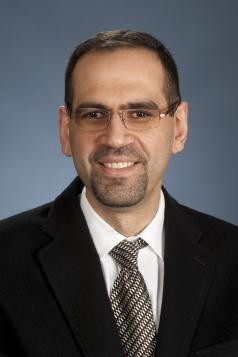
Waleed Khalil, Ph.D.
Click to view biography
Dr. Waleed Khalil received his B.S. and M.S. degrees from the University of Minnesota in 1992 and 1993, respectively, and his Ph.D. degree from Arizona State University in 2008.
He is a professor in the Department of Electrical and Computer Engineering and the ElectroScience Laboratory at The Ohio State University.
He also serves as Co-Director of the Air Force Center of Excellence for Enabling Cyber Defense in the Analog and Mixed-Signal Domain and the National Microelectronics Security Training Center.
Before joining The Ohio State University in 2009, he spent 16 years at Intel Corporation in wireless and wireline communication groups.
His research focuses on integrated circuits and systems for wireless and wireline communications, hardware security, heterogeneous chip integration, and image sensing.
His honors include The Ohio State University College of Engineering Lumley Research Award and the Fred H. Pumphrey Distinguished Teaching Award.
His research group has received multiple paper and research awards, including recognition from TSMC and awards at the Wireless Innovation Forum, Phased Array Symposium, Compound Semiconductor Integrated Circuit Symposium, and GOMACTech Conference.
Dr. Khalil has authored 19 issued patents, additional pending patents, more than 130 journal and conference papers, and three books or book chapters.
He is a Senior Member of IEEE and has held leadership and editorial roles within the IEEE Solid-State Circuits Society, the RFIC Symposium, the IEEE International Symposium on Hardware-Oriented Security and Trust, and the IEEE Journal of Solid-State Circuits.
Professor
Department of Electrical and Computer Engineering, ElectroScience Laboratory, The Ohio State University
Design Challenges and Innovations in RF DACs for Millimeter-Wave Transmitters
Click to view abstract
RF digital-to-analog converters are emerging as an important enabling technology for next-generation communication, sensing, and radar systems.
By supporting direct digital synthesis of high-frequency signals, RF DACs can reduce the number of frequency- conversion stages and simplify conventional transmitter architectures.
As RF DAC operating frequencies extend into the millimeter-wave regime, however, maintaining high linearity and spectral purity becomes increasingly difficult.
Performance can be limited by timing skew, amplitude mismatch, frequency-dependent circuit behavior, clock-distribution errors, parasitic coupling, and electromagnetic effects within signal-combining and output networks.
These impairments generate unwanted spectral components that may substantially reduce spurious-free dynamic range.
This presentation examines architectural and circuit techniques for realizing high-linearity RF DACs for broadband signal generation and direct digital transmitters.
A frequency-domain framework for spurious-free dynamic-range analysis will be introduced. The framework incorporates electromagnetic effects and enables efficient prediction of high-frequency spectral performance.
The talk will highlight the influence of output-network design, frequency-dependent mismatches, clock distribution, device and path mismatch, signal-combining structures, and calibration strategies on transmitter linearity and spectral purity.
The presentation will connect circuit-level impairments to system-level transmitter performance and discuss opportunities for improving RF DAC operation at millimeter-wave frequencies.
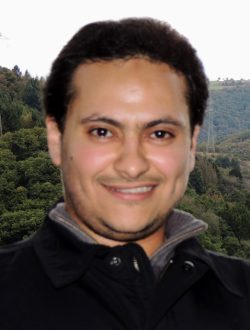
Wael Abdullah Ahmad
Click to view short bio
Wael Abdullah Ahmad (S’07–GS’12–M’20) received the B.Sc. and M.Sc. degrees in Electronics Engineering and Electrical Communication from Ain Shams University, Cairo, Egypt, in 2007 and 2012, respectively.
From 2008 to 2016, he worked on the development of RF and microwave high-power amplifiers and microwave modules for sub-6 GHz and C-band applications in Egypt.
In 2016, he joined the mm-Wave Wireless Group at IHP, Frankfurt (Oder), Germany, as a Radar Research Scientist and MMIC Designer, where he pursued his Ph.D. research in millimeter-wave BiCMOS radar sensors and integrated antenna technologies.
His current research interests include microwave and millimeter-wave circuits and systems, radar and wireless sensing, MIMO and phased-array systems, power amplifiers, interconnection technologies, and antenna design.
He has authored and co-authored numerous scientific publications, received several international research awards, and has served as a reviewer for leading journals and conferences. Since 2021, he has been an Affiliate Member of the IEEE MTT-S Microwave/mm-Wave Radar, Sensing and Array Systems Technical Committee (MTT-24).
Radar Research Scientist & MMIC Designer
Keysight Technologies, Germany & Technical University of Berlin, Germany
Design & Realization of a mmWave Multimode Scalable Radar Platform
Click to view abstract
This talk presents the realization of a modular and scalable radar platform operating at W-band and D-band using a single relaxed 40-GHz local oscillator together with cascadable transceiver chips.
The radar architecture supports multiple sensing and communication functions, including ranging, direction-of-arrival (DoA) estimation, velocity and vibration measurements, and wireless data communication.
Frequency-Modulated Continuous Wave (FMCW) radar is demonstrated with centimeter-level range resolution, while chirp-sequence FMCW is employed to measure human heartbeat. Continuous-wave (CW) radar techniques are also used for vibration sensing, including distant selective vibration measurements using phase-modulated continuous wave.
Time-Division Multiplexing (TDM) MIMO radar is demonstrated for multi-target direction-of-arrival estimation, while Frequency-Division Multiplexing (FDM) MIMO radar based on ΔΣ modulation and Binary Phase Shift Keying (BPSK) modulators is presented for advanced radar applications.
The presentation concludes with the evaluation of a BPSK communication link, demonstrating the capability of integrating wireless communication and radar sensing within a unified mmWave platform.
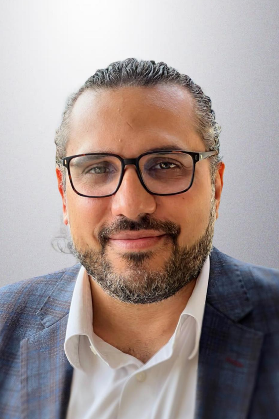
Mohamed Elhadidy, Ph.D.
Click to view biography
Prof. Dr.-Ing. Mohamed El-Hadidy is a Professor of IoT, High-Frequency and Digital Communication Technology at RheinMain University of Applied Sciences, Germany.
He holds a Dr.-Ing. in Communication Engineering from Leibniz University Hannover and a second PhD in Islamic Studies from Novi Pazar, Serbia.
His research focuses on Chipless RFID systems, wireless communication, microwave imaging, electromagnetic simulation, and 5G/6G technologies.
He has authored more than 80 peer-reviewed publications and is a Senior Member of the IEEE.
Department Chair
RheinMain University of Applied Sciences
Wiesbaden, Germany
Long-Range RCS Detection for MIMO Chipless RFID: Spatial Diversity, Equalization, and Combining in a Cost-Effective Testbed
Click to view abstract
Chipless radio-frequency identification offers the potential for low-cost and battery-free identification, but reliable long-range detection remains challenging because of weak radar-cross-section responses, environmental clutter, multipath propagation, tag orientation, and variation among measurement channels.
This presentation examines the use of MIMO measurement configurations and spatial diversity to improve long-range radar-cross-section detection of chipless-RFID tags.
Equalization and signal-combining techniques are used to exploit independently observed tag responses, mitigate channel-dependent distortion, and improve detection robustness.
The talk will describe a cost-effective experimental testbed developed to evaluate these techniques under realistic operating conditions.
Particular attention will be given to the relationship among MIMO configuration, spatial diversity, channel equalization, combining strategy, measurement repeatability, and achievable detection range.
Experimental observations can be used to illustrate the practical benefits and limitations of diversity-based chipless-RFID detection.