IEEE IMAS 2026 Frontiers in Antennas and Electromagnetic Systems: MIMO, Intelligent Apertures, Millimeter-Wave and Terahertz Technologies, and RF Integration
Prof. Stefano Maci
Click to view short bio
Stefano Maci is a Professor at the University of Siena (UNISI), with scientific responsibility for a research group of 15 researchers. He is also the Director of the UNISI PhD School of Information Engineering and Science, which presently includes about 60 PhD students.
His research interests include high-frequency and beam representation methods, computational electromagnetics, large phased arrays, planar antennas, reflector antennas and feeds, metamaterials, and metasurfaces.
Since 2000, Prof. Maci has been responsible for several projects funded by the European Union, including serving as WP Leader of the Antenna Center of Excellence (ACE, FP6-EU) from 2004 to 2007 and as International Coordinator of a 24-institution Marie Curie Action consortium from 2007 to 2010.
He has also carried out research projects supported by the European Space Agency (ESA-ESTEC), the European Defence Agency (EDA), the US Army Research Laboratory (ARL), and numerous international industries and research institutions.
Prof. Maci has served on the Technical Advisory Boards of international conferences, Review Boards of international journals, and has organized numerous special sessions and short courses for the IEEE Antennas and Propagation Society.
He has served as Associate Editor of IEEE Transactions on Electromagnetic Compatibility and IEEE Transactions on Antennas and Propagation, as well as Guest Editor of special issues. In 2003, he was elected a Fellow of IEEE.
In 2004, he founded the European School of Antennas (ESoA), a leading PhD school covering antennas, propagation, electromagnetic theory, and computational electromagnetics. The school brings together leading European research centers and experts in the field.
Prof. Maci has also been involved in NATO research activities and is currently involved in research related to metamaterials for defense and security applications.
He was co-founder of two spin-off companies and has served as honorary President of LEAntenne e Progetti SPA since 2008.
His research activity includes 10 book chapters, more than 100 papers in international journals, and approximately 300 papers in international conference proceedings. His research has received more than 2000 citations according to Google Scholar.
Professor of Electromagnetics & Antennas
University of Siena (UNISI), Italy
Degrees-of-Freedom-Based Figures of Merit for MIMO Antenna Arrays
Click to view abstract
This talk introduces a new set of electromagnetic parameters for characterizing MIMO antenna arrays, derived directly from the Degrees of Freedom (DoF) of the radiated field.
Unlike conventional metrics based primarily on the number of antenna ports or correlation coefficients, the proposed parameters quantify the intrinsic multiplexing capability that can be supported within a prescribed electromagnetic cell.
The formulation establishes a rigorous relationship between the electromagnetic DoF, the Cell Correlation Matrix (CCM), and the MIMO channel matrix.
By appropriately scaling the eigenvalue spectra of the CCM and the channel matrix, closed-form expressions are obtained for the achievable channel capacity under both equal-power and water-filling power allocation strategies.
The analysis demonstrates that the effective rank of the CCM, determined by the field DoF, defines the maximum number of independent communication channels and that adding antenna ports beyond this limit provides only marginal capacity improvement over a broad range of SNRs.
The resulting DoF-based parameters constitute fundamental figures of merit for MIMO antenna arrays, providing performance bounds that are independent of the specific antenna implementation while offering rigorous benchmarks for the design and assessment of next-generation MIMO systems.
These results establish the electromagnetic DoF as the fundamental quantity governing multiplexing capability, capacity, and overall antenna performance.
Dr. George Shaker
Click to view short bio
George Shaker, PhD, is an Adjunct Associate Professor in Electrical and Computer Engineering at the University of Waterloo and Director of the Wireless Sensors and Devices Laboratory at the Schlegel–University of Waterloo Research Institute for Aging.
He received his bachelor’s degree from Cairo University and his master’s and PhD degrees from the University of Waterloo.
His research focuses on antennas, radio-frequency and millimeter-wave systems, wireless sensing, and artificial intelligence, with applications in healthcare, autonomous vehicles, unmanned aerial vehicles, and the Internet of Things.
He has co-authored more than 200 peer-reviewed publications, holds over 35 patents, and serves as an IEEE Sensors Council Distinguished Lecturer for 2025–2027.
Adjunct Associate Professor, Electrical and Computer Engineering
University of Waterloo, Canada
Radar Reimagined: MIMO Antennas as the Eyes of Physical AI
Click to view abstract
Radar has evolved from a sensor that measures range and velocity into an intelligent perception system that can detect, locate, classify, and understand people, objects, and motion.
MIMO antennas are central to this transformation because they shape how radar observes space, resolves complex scenes, and captures the information required by Physical AI.
This lecture explores how antenna array geometry, virtual apertures, radiation patterns, waveform design, calibration, propagation, and artificial intelligence work together to determine what radar can see.
Drawing on automotive sensing, human monitoring, biomedical radar, and UAV detection, it presents a vision of MIMO radar as an intelligent aperture that connects machines to the physical world.
Prof. Tayeb Denidni
Click to view short bio
Prof. Tayeb A. Denidni (IEEE Fellow) received M. Sc. and Ph.D. degrees in electrical engineering from Laval University, Quebec City, QC, Canada, in 1990 and 1994, respectively.
From 1994 to 2000, he was a professor in the engineering department at Université du Quebec in Rimouski, QC, Canada. Since August 2000, he has been a professor with the Institut National de la Recherche Scientifique (INRS), Université du Quebec, Montréal, Canada.
He founded the RF laboratory at INRS, Montréal, and is a well-known expert in antennas. He has served as a principal investigator on many research projects sponsored by numerous telecommunications industries.
He has co-authored more than 350 journal papers, 400 conference papers, 2 books, and 12 book chapters.
He has gained international recognition for his innovative and pioneering work on frequency selective surfaces and their applications to reconfigurable antennas, beamforming systems, reflective intelligent surfaces (RIS), and mm-wave antennas.
He has been elevated to IEEE Fellow for his contributions to frequency selective surfaces and their applications to reconfigurable antennas.
Professor, Institut National de la Recherche Scientifique (INRS)
Université du Quebec, Montréal, Canada
Advanced Reconfigurable Antennas for Future Wireless Communications
Click to view abstract
Using engineered electromagnetic materials, novel advanced reconfigurable antenna designs with advanced features can be developed and used as an enabling technology to improve the performance of future wireless communication, radar, and space systems at microwave and mm-wave bands.
These approaches use advanced artificial periodic electromagnetic structures, including electromagnetic band gap structures, frequency selective surfaces and metasurfaces.
The objective is to design and implement new compact, low profile, low-cost antenna systems with high performance in terms of beamforming capability, high gain, and efficiency.
In this talk, a brief introduction to wireless communication systems, presenting their potentials, evolution, and challenges, will be given. Second, I will give an overview of periodic electromagnetic structures and their applications in advanced antenna designs.
To show the beamforming features of these antennas, some examples of simulated and experimental results will be presented and discussed. Finally, concluding remarks will be given.
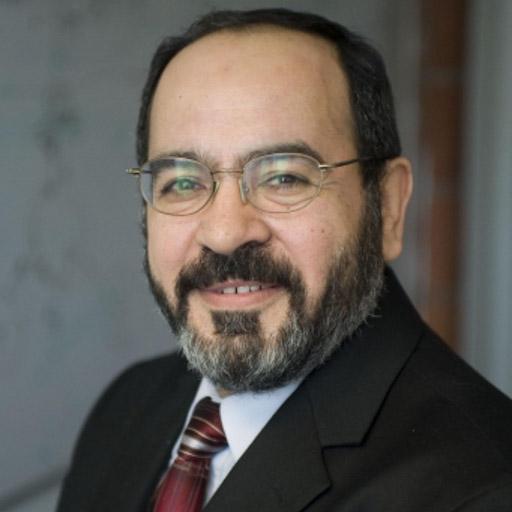
Prof. Ahmed A. Kishk
Click to view short bio
Ahmed A. Kishk is a Professor of Electrical and Computer Engineering at Concordia University, Montréal, where he served as a Tier 1 Canada Research Chair in Advanced Antenna Systems from 2011 to 2025.
He received his Ph.D. in Electrical Engineering from the University of Manitoba in 1986 and previously served as a professor and director of the Center for Applied Electromagnetic System Research at the University of Mississippi.
His research spans advanced antenna systems, millimeter-wave technologies for 5G/6G, phased arrays, beamforming networks, dielectric resonator antennas, reflectarrays, electromagnetic surfaces, and microwave sensors.
He has published more than 1,200 journal and conference papers and co-authored four books.
He is a Life Fellow of IEEE, ACES Fellow, and Electromagnetic Academy Fellow. He served as President of the IEEE Antennas and Propagation Society in 2017 and has received numerous research and education awards.
Professor of Electrical and Computer Engineering
Concordia University, Montréal, Canada
All Metal Millimeter Wave Antennas
Click to view abstract
Material losses, such as those in dielectric materials, are undesirable in millimeter-wave applications due to their high losses. Although dielectric materials are unavoidable, they should be minimized, particularly in long guiding structures.
Gap waveguide technology overcomes these limitations in millimeter-wave bands. This structure is well suited to millimeter-wave applications because it is self-packaged and has no radiation losses. This guiding structure has an approximate 1:2 bandwidth, which can also be enhanced under certain conditions.
The talk presents several highly efficient antenna arrays based on gap-waveguide technology.
It also presents examples of added functions, such as diplexers that separate transmit and receive bands, monopulse arrays with compact comparators based on gap-waveguide technology, and leaky-wave antenna arrays with frequency-scanning properties.
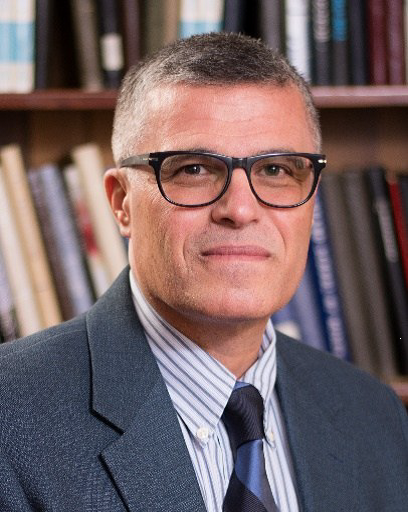
Atef Z. Elsherbeni
Click to view short bio
Atef Z. Elsherbeni is a Professor of Electrical Engineering at the Colorado School of Mines, an IEEE Life Fellow, and an ACES Fellow.
He received honors B.Sc. degrees in Electronics and Communications and Applied Physics, and an M.Eng. degree in Electrical Engineering from Cairo University. He earned his Ph.D. in Electrical Engineering from the University of Manitoba in 1987.
After a postdoctoral appointment at the University of Manitoba, Dr. Elsherbeni joined the University of Mississippi in 1987, where he became Professor of Electrical Engineering and later served as Associate Dean of Engineering for Research and Graduate Programs from 2009 to 2013.
In 2013, he joined the Colorado School of Mines as the Dobelman Distinguished Chair Professor. He subsequently served as Interim EECS Department Head and Electrical Engineering Department Head.
His international academic appointments include a sabbatical at UCLA, visiting professorships at Magdeburg University and Tampere University of Technology, and selection as a Finland Distinguished Professor in 2009.
Dr. Elsherbeni is Editor-in-Chief of the ACES Journal and previously served as President of ACES, General Chair of the 2014 APS-URSI Symposium, and an Associate Editor of Radio Science.
He was an IEEE Antennas and Propagation Society Distinguished Lecturer for 2020–2023.
His honors include the 2023 IEEE APS Harrington-Mittra Award for contributions to computational electromagnetics with hardware acceleration and the 2025 Computational Electromagnetics Award from the ACES Society.
Dobelman Distinguished Chair Professor in Electrical Engineering
Colorado School of Mines, USA
Structured Electromagnetic Waves and Their Scattering Characteristics from Far-Field Targets
Click to view abstract
Structured electromagnetic waves are characterized by spatially varying amplitude, phase, and polarization distributions that differ fundamentally from conventional plane waves. This talk focuses on Laguerre–Gaussian (LG) and Hermite–Gaussian (HG) beams and their scattering characteristics when illuminating far-field targets.
LG beams possess radial and azimuthal mode indices, helical phase fronts, and orbital angular momentum (OAM), while HG beams exhibit rectangularly symmetric, multi-lobed field distributions. These engineered spatial structures provide additional degrees of freedom for sensing, imaging, communications, and radar.
When focused on a target, LG and HG beams produce nonuniform illumination across its surface, creating induced currents and scattering responses that differ from those generated by Gaussian beams or plane waves. LG scattering is particularly sensitive to target geometry, orientation, and position relative to the beam axis, while its OAM structure can introduce distinctive modal interactions. HG beams can selectively illuminate different target regions, making their scattering signatures sensitive to target shape and spatial extent.
The resulting far-field scattering depends on beam order, focusing parameters, polarization, and target characteristics. These dependencies offer additional information for target detection, discrimination, and classification.
Computational electromagnetic methods—including finite-difference time-domain (FDTD), finite-element, and integral-equation techniques—enable rigorous analysis of these interactions. Studies demonstrate that carefully selecting beam waist, focal location, and modal order can significantly modify induced currents, scattering patterns, and spectra.
Structured electromagnetic illumination therefore offers a promising framework for enhanced radar, remote sensing, imaging, and target-recognition systems.
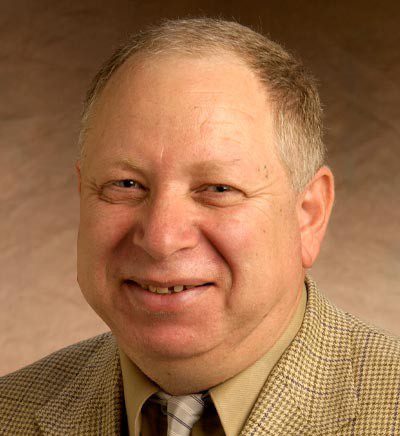
Prof. Aly E. Fathy
Click to view short bio
Aly E. Fathy, PhD, IEEE Fellow, is a Professor in the Min H. Kao Department of Electrical Engineering and Computer Science at the University of Tennessee, Knoxville. He received his PhD in electrical engineering from the Polytechnic Institute of New York and joined UT in 2003 after an extensive research career at RCA Laboratories and the Sarnoff Corporation.
His research encompasses electromagnetics, microwave circuits, advanced antennas, ultrawideband systems, millimeter-wave radar, 5G communications, and RF sensing. He is particularly recognized for pioneering contributions to silicon-based reconfigurable antennas and surface-wave holographic antennas, including the experimental demonstration of a 35-GHz holographic aperture.
He holds 16 U.S. patents and received the 2021 IEEE Microwave Theory and Technology Society Distinguished Educator Award.
Professor of Electrical Engineering and Computer Science
University of Tennessee, Knoxville, USA
Holographic Antennas: Concepts, Applications, and Implementations
Click to view abstract
Holographic antennas offer a low-profile alternative to conventional reflector and phased-array systems by encoding the interference pattern between a guided reference wave and a desired radiated object wave onto an electromagnetic aperture.
The resulting hologram, implemented through spatial variations in metallic geometry, dielectric properties, surface impedance, or electrical conductivity, progressively transforms a bound surface wave into a directive free-space beam.
Dr. Uche Wejinya
Click to view short bio
Uche Wejinya is an Associate Professor in the Department of Mechanical Engineering and the Director of the Center for High-Frequency Electronics and Circuits for Communication Systems at the University of Arkansas – Fayetteville.
His research interests include materials for antenna design, fabrication, and testing; THz systems; mechatronics with emphasis on robotics and biomechanics; nanotechnology and nanomaterials for nanosensors; and control systems design and application.
Dr. Wejinya is the author and co-author of more than 90 journal and conference articles. He holds 2 U.S. patents and is the author of 2 book chapters. He has given more than 20 invited talks and seminars nationally and internationally, including presentations at IMAS 2023, 2024, and 2025.
In 2022, he participated in the First U.S.-Africa Frontiers of Science, Engineering, and Medicine Symposium organized by NASEM and the African Academy of Sciences in Nairobi, Kenya. Dr. Wejinya is a member of IEEE, ASME, ASEE, and NSBE.
Associate Professor of Mechanical Engineering
University of Arkansas – Fayetteville, USA
Design and Analysis of a Hybrid Terahertz Patch Antenna on a Flexible PVDF Substrate
Click to view abstract
Flexible terahertz (THz) antennas have attracted increasing interest for wearable electronics, flexible sensing systems, and conformal communication platforms.
In this work, a hybrid circular–triangular microstrip patch antenna was designed and analyzed using CST Studio Suite based on a flexible polyvinylidene fluoride (PVDF) substrate architecture inspired by previously reported self-attenuating graphene-based antennas.
The proposed design incorporates a circular radiating patch combined with a triangular perturbation element to modify current distribution and investigate resonance behavior under mechanical deformation. Simulations were performed for flat and bent configurations with bending radii of 800 µm, 600 µm, 400 µm, 100 µm, and 75 µm.
Antenna performance was evaluated using reflection coefficient (S11), voltage standing wave ratio (VSWR), directivity, radiation efficiency, total efficiency, and realized gain. This workshop will discuss the steps and results obtained.
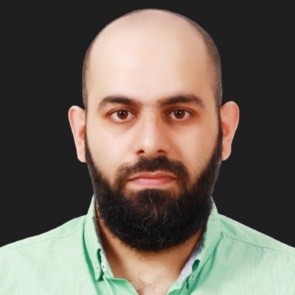
Dr. Ahmed Abdelmottaleb Omar
Click to view biography
Ahmed Abdelmottaleb Omar (Senior Member, IEEE) received the Ph.D. degree in electrical engineering from Nanyang Technological University, Singapore, in 2019.
Since August 2022, he has been an Assistant Professor with the Department of Electrical Engineering, King Fahd University of Petroleum and Minerals (KFUPM), Dhahran, Saudi Arabia.
He is also a Research Scholar of the Interdisciplinary Research Center for Communication Systems and Sensing, KFUPM.
From April 2019 to November 2021, he joined Pohang University of Science and Technology (POSTECH), South Korea, as a Post-Doctoral Research Associate.
He was with the University of Wisconsin–Madison, USA, as a Post-Doctoral Research Associate, from November 2021 to August 2022.
His current research interests include the analysis and design of frequency-selective surfaces/structures, microwave absorbers, polarization rotators, and compact, wideband, and dual-polarized mm-Wave 5G antennas, as well as reflector/lens and reflectarray antennas.
He is currently serving as an Associate Editor for IEEE Open Journal of Antennas and Propagation.
He has been recognized as Outstanding Associate Editor of IEEE Open Journal of Antennas and Propagation for 2025 and 2026.
Assistant Professor
Department of Electrical Engineering
King Fahd University of Petroleum & Minerals
Saudi Arabia
Customized Response Reflective Polarization Rotator
Click to view abstract
This talk presents a general methodology for designing customized high-order and multiband reflective polarization rotators (RPRs) using orthogonal and parallel resonator orientations.
Consecutive resonances with orthogonal orientations can merge into a continuous operating band by suppressing the cross-polarized reflection zero, while resonances with the same orientation can introduce a zero and enable multiband operation.
Using this principle, second-order dual-band, third-order single-band, and fourth-order single-band RPRs are demonstrated.
The polarization conversion mechanism is explained using a transfer-matrix model, reflection responses, and surface-current distributions.
Two fabricated prototypes show good agreement between simulation and measurement, validating the design approach.

Prof. Mohamed Essaaidi
Click to view biography
Prof. Mohamed Essaaidi is an internationally recognized scientist in RF and wireless technologies, and digital transformation. He has over three decades of experience in RF, microwave, and antenna systems, along with active leadership in both IEEE MTT-S and IEEE AP-S.
He founded the Mediterranean Microwave Symposium (MMS) and has served as its General Chair since 2000, while also serving as General Co-chair of IMAS 2024, demonstrating a sustained commitment to advancing microwave engineering.
As past Chair of the IEEE Morocco Section (2004–2016), he built regional technical capacity. He has led major smart city forums, including the IEEE Smart Cities Summit in Marrakech in 2024 and the NSF Smart Sustainable Cities Workshop in 2017, engaging deeply with urban KPIs and ISO/ITU/NIST standards.
With 245+ publications and 10 patents in RF, wireless communications, and antennas, Prof. Essaaidi has made significant contributions to the field.
As an advisor to the UN, ITU, and UNESCO, and Global Chair of IEEE HTB/SIGHT (2023–2025), he champions resilient, inclusive development.
His awards include the 2024 IEEE Education Society William E. Sayle II Award and the 2023 IEEE MGA Larry K. Wilson Transnational Award.
Professor
ENSIAS College of Engineering / Mohammed V University in Rabat
Converging RF, Microwave, Wireless, IoT, and AI Technologies for Sustainable and Resilient Smart Cities
Click to view abstract
This talk examines the smart city paradigm through the critical yet often-overlooked lens of RF, microwave, wireless and antenna technologies that form its sensory and communications backbone.
We first establish foundational definitions, features, and enabling technologies, alongside key performance indicators and standards—including IEEE Standards, ISO 37120/37122, and the NIST Holistic KPI framework—that quantify urban intelligence and resilience.
In fact, ubiquitous RF infrastructure is not merely a conduit for data but an active sensing and energy-harvesting ecosystem: advanced reconfigurable antennas, mmWave arrays, and passive RF sensing enable real-time urban digital twins, while microwave energy harvesting powers self-sustaining IoT networks.
Use cases span AI-driven 5G signal forecasting, GNSS-based building ranging, and adaptive smart building systems.
Ultimately, sustainable, resilient smart cities emerge from the convergence of RF sensing, AI analytics, and standardized metrics—creating a continuous feedback loop where urban infrastructure senses, learns, and withstands future challenges.
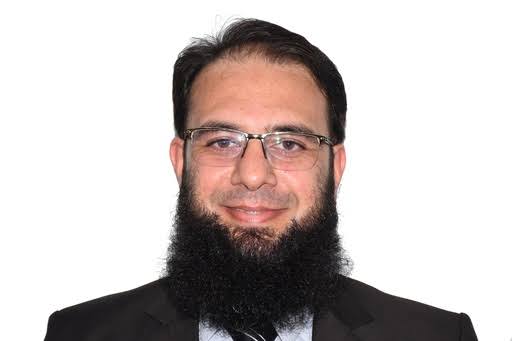
Dr. Waqar Ahmad Malik
Click to view short bio
Dr. Waqar Ahmad Malik received his B.S. degree in Electrical Engineering from NWFP University of Engineering & Technology, Peshawar, Pakistan, in 2004, and his M.S. degree in Radio Systems Engineering from The University of Hull, UK, in 2006.
He received his Ph.D. in Electrical Engineering with a focus on active microwave circuits from King Saud University, Riyadh, Saudi Arabia, in 2018.
Dr. Malik has over 18 years of experience in academia, research, RF engineering, and professional consultancy. He has served as a Lecturer at the University of Engineering & Technology, Mardan, and as an Assistant Professor at FAST-NUCES, Abasyn University Islamabad, and the National University of Sciences and Technology (NUST), Pakistan.
He currently serves as a Systems Engineer at the NASTP Electronic Systems Design Center (NESDC), Islamabad, while on leave from NUST.
His interests include RF and microwave systems, UWB RF front-end design, microwave circuits, phased arrays, electronic warfare systems, radar engineering, and high-power RF amplifiers.
He has contributed to both academia and industry through teaching, research, consultancy, and advanced RF system development.
Systems Engineer, NASTP Electronic Systems Design Center (NESDC)
Islamabad, Pakistan
Wideband RF Front-End Design: From Frequency Planning to Performance Optimization
Click to view abstract
Modern communication, radar, electronic warfare, ELINT, and software-defined radio systems require RF front ends with wide bandwidth, high dynamic range, low noise, spectral purity, and stringent SWaP-C constraints.
This workshop presents a practical end-to-end methodology for translating system requirements into manufacturable RF hardware.
Topics include architecture selection, frequency planning, LO and IF design, spur analysis, frequency conversion, component selection, and cascaded gain, noise-figure, and linearity budgeting.
System-level simulation and representative case studies are used to verify performance and guide design optimization before implementation.
Practical PCB considerations—including layout, grounding, isolation, shielding, and subsystem integration—are also addressed.
Participants will gain a structured workflow for designing, analyzing, simulating, and implementing high-performance RF front ends for communication, radar, SDR, and electronic-warfare applications.