IEEE IMAS 2026 Microwave Technologies for Quantum Computing Workshop
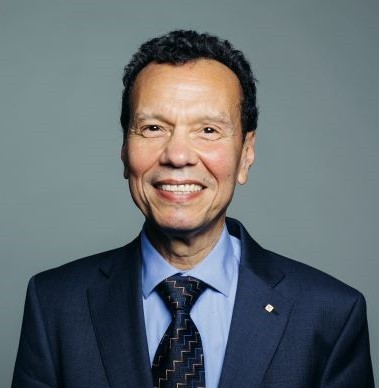
Prof. Abbas Omar
Click to view biography
Dr. Omar is a Professor Emeritus at the Otto von Guericke University of Magdeburg in Germany.
He received his B.Sc., M.Sc., and Doktor-Ing. degrees in electrical engineering in 1978, 1982, and 1986, respectively.
He has been a professor of electrical engineering since 1990 and served as the Director of the Chair of Microwave and Communication Engineering at the Otto von Guericke University of Magdeburg, Germany, from 1998 until his retirement in 2020.
He joined the Petroleum Institute in Abu Dhabi as a Distinguished Professor in 2012 and 2013, where he organized research activities for the oil and gas industry in the region.
In 2014 and 2015, he chaired the Department of Electrical and Computer Engineering at the University of Akron, Ohio, USA.
Dr. Omar has authored and co-authored more than 490 technical papers spanning a wide spectrum of research areas.
His current research and teaching interests include quantum computing, the health aspects of millimeter-wave radiation, phased arrays, and beamforming for massive MIMO, and magnetic resonance imaging.
In the past, he has also contributed to various other disciplines, including microwave and acoustic imaging, microwave and millimeter-wave material characterization, indoor positioning, subsurface tomography, and ground-penetrating radar, as well as field-theoretical modeling of microwave systems and components.
Dr. Omar is a Life Fellow of the IEEE.
Professor Emeritus
Otto von Guericke University of Magdeburg
Germany
Role of Microwave Technologies in Quantum Computing
Click to view abstract
This webinar highlights the role of microwave technologies in quantum computing.
It begins with a quick review of the basic differences between classical and quantum computers.
It proceeds by considering the fundamentals of qubits and quantum gates as essential components of microwave quantum computers.
It then examines superconducting transmon resonant circuits as a common microwave implementation of quantum bits (qubits).
Finally, it discusses practical implementations and explains how they operate. In particular, a basic superconducting qubit is examined along with its control and readout microwave circuits.
The simplest quantum gate, the controlled NOT (CNOT), is then discussed.
Relevant microwave components, such as tunable couplers and ultra-low-noise amplifiers, are examined to highlight the importance of advanced microwave technologies in the reliable implementation of quantum computers.
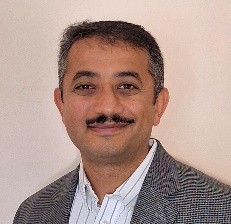
Dr. Mohamed Hassan
Click to view biography
Mohamed Hassan leads the Quantum EDA segment at Keysight, where he focuses on developing design solutions for emerging quantum technologies.
With over two decades of experience as an RF engineer, he has worked on some of the most demanding electromagnetic challenges, from optimizing superconducting cavities for particle accelerators to advancing superconducting qubits for quantum computing and sensing.
His work spans both theoretical design and hands-on prototyping, including ultra-low-temperature testing of cavities and qubits.
Mohamed is deeply familiar with a wide range of electromagnetic and multiphysics EDA tools, and his current role involves driving innovation in the fast-evolving Quantum EDA space.
He has authored or co-authored more than 100 technical papers and reports, holds two U.S. patents, and is a senior member of IEEE as well as a member of the American Physical Society.
Segment Manager – Quantum EDA
Keysight Technologies
From Microwave Engineering to Superconducting Quantum Systems
Click to view abstract
Quantum computing promises to solve certain problems that are difficult for today’s computers, but building quantum hardware presents unique engineering challenges.
Among the leading approaches, superconducting quantum circuits rely heavily on microwave engineering concepts such as resonators, amplifiers, and electromagnetic design.
This talk provides a beginner-friendly introduction to the microwave engineering principles behind superconducting quantum systems.
We will explore how microwave signals are used to control and measure qubits, the role of resonators and amplifiers in quantum hardware, and some of the challenges involved in building larger quantum systems.
The talk will also introduce simulation and design tools used to analyze quantum circuits and illustrate how familiar microwave engineering techniques are helping shape the future of quantum computing.