IEEE IMAS 2026 Distinguished Lecturers Workshop
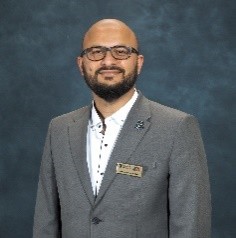
Prof. Qammer H. Abbasi
Click to view short bio
Qammer H. Abbasi is Professor of Applied Electromagnetics & Sensing with the James Watt School (JWS) of Engineering, Theme Lead for Connecting People priority at JWS, Founding Director of the Centre for Integrated Sensing, Communication and Computing for Cognitive Cities, Government Advisor, and a Scottish Science Advisory Council Member.
He has a grant portfolio of £15M+ and has contributed to more than 500+ leading international technical journal publications, including the Nature portfolio, and peer-reviewed conference papers, as well as 11 books.
He has received several recognitions for his research, including UK Exceptional Talent endorsement by the Royal Academy of Engineering, the Sensor 2021 Young Scientist Award, a University-level Teaching Excellence Award, and the Scottish Muslim Innovator Award.
His work has also received international media coverage, including BBC News, Scotland TV, FierceWireless, The Engineer, and many other media outlets globally.
Prof. Abbasi is an IEEE Senior Member and is Chair of the IEEE APS/MTT UK, Ireland and Scotland Joint Chapter. He is also an IEEE APS Distinguished Lecturer and Chair of the IEEE APS Young Professional Committee.
He has been a Fellow of the Royal Society of Arts (2022–2024), Fellow of the Royal Society of Edinburgh, Industrial Fellow of the Royal Academy of Engineering (2022–2023), Fellow of the Institution of Engineering and Technology, and Fellow of the European Alliance for Innovation.
Professor of Applied Electromagnetics & Sensing
James Watt School (JWS) of Engineering
Integrated Sensing, Communication and Computing for Cognitive Cities
Click to view abstract
Future cities will require communication networks that go far beyond data connectivity, evolving into intelligent platforms capable of sensing, understanding, and interacting with the physical world in real time.
This talk will explore the emerging convergence of integrated sensing, communication and computing as a foundational paradigm for enabling cognitive cities, where wireless infrastructure acts not only as a communication medium but also as a distributed perceptive and decision-making system.
A central focus of the talk will be on Reconfigurable Intelligent Surfaces (RIS), an emerging technology that enables programmable control of electromagnetic wave propagation through software-defined metasurfaces.
RIS offers a transformative approach for next-generation 6G systems by dynamically manipulating the amplitude, phase, and polarization of radio waves to improve communication, sensing, and localisation performance.
In communication networks, RIS enhances spectral and energy efficiency, extends coverage in Non-Line-of-Sight environments, and enables intelligent beamforming with very low hardware complexity and power consumption.
Beyond communications, the talk will highlight how RIS-enabled integrated sensing and communication (ISAC) systems can support high-accuracy environmental perception and human-centric sensing, including real-time monitoring of heartbeat and respiration in challenging indoor and obstructed environments.
The integration of sensing and edge computing capabilities further enables context-aware and adaptive services for healthcare, mobility, smart homes, and urban infrastructure.
Collectively, these technologies are paving the way toward sustainable, resilient, and intelligent wireless ecosystems capable of supporting the vision of cognitive cities.
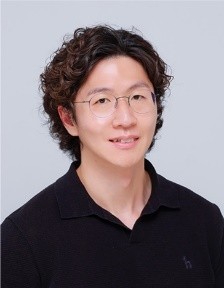
Dr. Gangil Byun
Click to view short bio
Dr. Gangil Byun (S’12, M’15, SM’21) received his B.S. and M.S. degrees in Electronic and Electrical Engineering from Hongik University, Seoul, South Korea, in 2010 and 2012, respectively.
He received his Ph.D. degree in Electronics and Computer Engineering from Hanyang University, Seoul, South Korea, in 2015.
Following graduation, he joined Hongik University as a Research Professor, where he conducted research for two years.
In February 2018, he joined Ulsan National Institute of Science and Technology (UNIST), Ulsan, South Korea, where he is currently an Associate Professor in the Department of Electrical Engineering.
He is the Director of the Mission-Driven Satellite Systems Research Center (Space-K) and the Core RF/Power Component Research Center for Low-Orbit Next-Generation Satellites (LONGS).
He also leads the InnoCORE Intelligent Defense Systems Research Group (IDS RG).
He served as an IEEE Antennas and Propagation Society (AP-S) Young Professional Ambassador in 2023 and received the IEEE AP-S Young Professional of the Year Award in 2024.
Associate Professor
Department of Electrical Engineering
Ulsan National Institute of Science and Technology (UNIST)
Ulsan, South Korea
Ultrawideband Antenna Arrays with Frequency-Invariant Monopulse Beamforming for Direction Finding
Click to view abstract
Wideband direction finding requires antenna arrays and beamforming systems that maintain consistent performance over a broad frequency range.
This talk introduces an integrated approach that addresses this challenge from the perspectives of antenna design, beamforming algorithms, and hardware implementation.
First, an ultrawideband connected array antenna incorporating artificial dielectric layers is presented. The artificial dielectric structure enables broadband operation while supporting a compact and practical array configuration.
A frequency-invariant beamforming method is then introduced to generate stable sum and difference patterns across frequency.
By combining these patterns with a monopulse-based direction-finding approach, the proposed method provides rapid angle estimation without conventional beam scanning while maintaining consistent angular coverage over the operating band.
Finally, the frequency-dependent weights required by the algorithm are implemented using a passive analog beamforming network composed of microwave filtering, combining, and hybrid-coupler structures.
Simulation and measurement results are presented to demonstrate the feasibility of realizing the proposed beamforming characteristics in practical hardware.
The talk highlights how antenna, algorithm, and circuit design can be jointly considered to develop compact and broadband direction-finding systems.
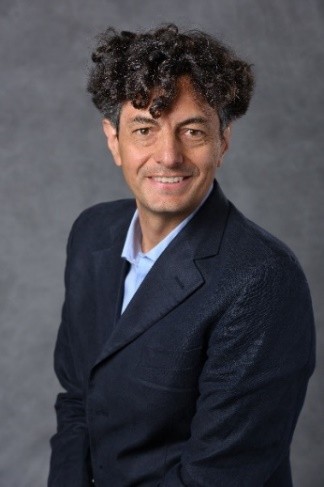
Mauro Ettorre
Click to view biography
Mauro Ettorre received a Laurea degree “summa cum laude” in Electrical Engineering and a Ph.D. degree in Electromagnetics from the University of Siena, Italy, in 2004 and 2008, respectively.
Part of his Ph.D. work was conducted at TNO in the Netherlands.
Since 2023, he has been a Professor at Michigan State University, East Lansing, USA. Previously, he was a Research Scientist at the CNRS, IETR laboratory in France.
From 2014 to 2020, he co-led the multi-beam antenna activity for satellite applications at the joint laboratory between IETR and Thales Alenia Space in France.
From 2016 to 2021, he led the mm- and sub-mm-wave team at IETR.
Dr. Ettorre’s research interests include the analysis and design of quasi-optical systems, periodic structures, wideband arrays, millimeter-wave antennas, non-diffractive radiation, and localized waves.
He has authored over 97 journal papers and 250 conference communications and holds 14 patents (2 licensed) on millimeter-wave antenna technology.
Dr. Ettorre is a Fellow of IEEE. From 2017 until 2023, he served as Associate Editor for the IEEE Transactions on Antennas and Propagation. Since 2023, he has served as Track Editor for the same journal.
He currently serves as the Editor-in-Chief of the IEEE Antennas and Propagation Magazine.
Dr. Ettorre is the 2024 IEEE MTT-S and AP-S Inter-Society Distinguished Lecturer.
The research activities of Dr. Ettorre have been recognized with several prizes, including the 2009 French Ministry of Research award for the most innovative project in all natural sciences, the Young Investigator Award from the French National Research Agency in 2014, and the Innovation Award at the 2018 ESA Antenna Workshop in the Netherlands.
He also received the Best Paper Award in Electromagnetics and Antenna Theory at EuCAP 2018, UK, the Best Antennas Paper Award at EuCAP 2021, Germany, and the Best Paper Award at iWAT 2023, Denmark.
Professor, FIEEE
Electrical and Computer Engineering
Michigan State University
East Lansing, MI
Near-field shaping, beaming, and communications
Click to view abstract
In this talk, I will discuss the challenges and opportunities associated with radiating systems in the near field for communications and sensing.
I will introduce the features of near-field devices and present optimization strategies to shape the radiated field while synthesizing the necessary radiating aperture. These capabilities will first be applied to sensing and then to communications.
Next, I will cover the concept of non-diffractive waves, which are solutions to Maxwell’s equations that maintain their profile as they propagate.
I will summarize my current research on non-diffractive beams in the radiative near field.
I will demonstrate how non-diffractive beams can be generated using planar radiating structures, such as metasurfaces and radial line-slot arrays, by exciting cylindrical leaky waves with various field polarizations and bandwidths.
I will also discuss the generation of X-waves, which are non-diffracting pulses.
I will introduce a wideband, circularly polarized radial line-slot array capable of generating X-waves in the millimeter-wave range.
Moreover, we will explore the ability of non-diffractive beams to overcome path loss and navigate obstacles.
To illustrate this, I will present an experimental non-diffractive link utilizing two spline-profiled horn antennas that generate Bessel beams at millimeter waves.
This experimental validation demonstrates the resilience of non-diffractive links to obstructions, paving the way for a novel paradigm in next-generation near-field wireless links.
Chen, Pai-Yen
Click to view biography
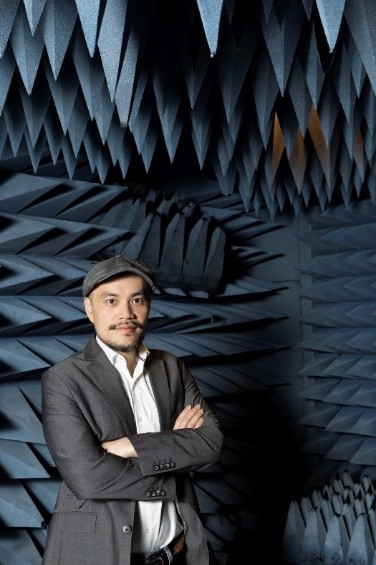
Prof. Pai-Yen Chen is a Professor and University Scholar in the Department of Electrical and Computer Engineering at the University of Illinois Chicago (UIC).
He received the Ph.D. degree from the University of Texas at Austin in 2013, and M.S. and B.S. degrees from National Chiao Tung University in 2006 and 2004, respectively.
He was a Research Scientist at Intellectual Ventures Laboratory (2013–2014) and an Assistant Researcher in the Taiwan Semiconductor Research Institute (2006–2009).
He has been involved in multidisciplinary research on electromagnetics, RF/microwave antennas and circuits, wireless sensors and systems, metamaterials, nanophotonics, and nanoelectronics.
He has received several prestigious awards, including Fulbright U.S. Scholar, IEEE Sensors Council Technical Achievement Award (advanced career), IEEE Sensors Council Young Professional Award, IEEE AP-S Raj Mittra Travel Grant, SPIE Rising Researcher Award, NSF CAREER Award, ACES Early Career Award, Young Scientist Award from Electromagnetics Academy and International Union of Radio Science (URSI), IOP Emerging Leader in Measurement Science and Technology, UIC Researcher of the Year Rising Star, and Donald Harrington Fellowship.
He currently serves as Senior Editor for IEEE Journal of Selected Areas in Sensors, Topical Editor for IEEE Sensors Journal, Track Editor for IEEE Transactions on Antennas and Propagation, and Associate Editor for Optics Express and Advanced Photonics Nexus.
He was a former Associate Editor of IEEE Antennas and Wireless Propagation Letters, IEEE Journal of Radio Frequency Identification, and IEEE Journal of Electromagnetics, RF and Microwaves in Medicine and Biology.
He currently serves as the Distinguished Lecturer for IEEE Sensors Council (2024–2026) and IEEE Antennas and Propagation Society (2026–2028).
He is a Fellow of IEEE and Optica/OSA.
Professor and University Scholar
Department of Electrical and Computer Engineering
University of Illinois Chicago (UIC)
Chicago, USA
Non-Hermitian Electromagnetics: New Opportunities and Enabling Applications
Click to view abstract
Over the past decade, non-Hermitian physics and its unique singularities—exceptional points (EPs)—have redefined wave engineering, facilitating breakthroughs in signal generation, routing, and sensing.
My talk starts with reviewing non-Hermitian physics and parity-time (PT) symmetry, demonstrating how the formal similarity between Schrödinger’s and Maxwell’s equations enable electromagnetic systems with unconventional functionalities like unidirectional propagation and chiral dynamics.
I will showcase our recent advancements in the RF and microwave domains, such as EP-based wireless sensors with unprecedented sensitivity, new classes of wideband, lossless and matched non-Hermitian metamaterials exhibiting extreme effective constitutive tensors, super-directive antennas, and entropy-boosted electromagnetic fingerprints for hardware security.
I will also introduce the self-dual absorber-emitter singularity in PT systems and their potential in tailoring laser thresholds and developing ultrasensitive interferometric sensors.
Mohammad Zarifi
Click to view biography
Mohammad Zarifi (Fellow IEEE, Ph.D., PEng, PRC Tier II) is currently an Associate Professor and Tier II Principal’s Research Chair (PRC) in Sensors and Microelectronics at the School of Engineering at the University of British Columbia.
He is also the director of the Okanagan MicroElectronics and Gigahertz Applications Laboratory (OMEGA Lab), Canada.
Dr. Zarifi has authored or co-authored more than 150 papers in peer-reviewed journals and conference proceedings and holds six issued or pending patents.
His research focuses on Applied Electromagnetics and Circuits and Systems for Communications and Sensing Applications.
Dr. Zarifi has served as the chair and a member of IEEE MTT-S TC-26 “RFID, Wireless Sensor, and IoT,” as well as a member of IEEE MTT-S TC-4 “Microwave Passive Components and Transmission Line Structures.”
He has also served as a Reviewer and an Associate Editor for several journals and conferences, including IEEE Transactions on Microwave Theory and Technology, IEEE Sensors Journal, and IEEE Open Journal of Antennas and Propagation.
Dr. Zarifi received the Emerging Researcher Award and the Best Teaching Award at the School of Engineering in 2020 and 2021, respectively.
He is an IEEE MTT-S Distinguished Microwave Lecturer for the class of 2024–2027.
Associate Professor & Tier II Principal’s Research Chair
University of British Columbia – Okanagan
Microelectronics and Gigahertz Applications Lab (OMEGA Lab)
Canada
Microwave/RF Devices and Their Interactions with Novel Nano-Materials for Sensing and Communication Applications
Click to view abstract
Microwave and Radio Frequency devices have demonstrated significant potential in non-destructive, non-ionizing, contactless, and wireless sensing applications. Among various structures, those with planar form factors are particularly attractive due to their conformal, inexpensive, and straightforward fabrication processes.
These microwave/RF sensors operate based on the perturbation of the electromagnetic (EM) field and the interaction of the EM field with materials in their close vicinity.
Conventionally, these microwave/RF sensors have been fabricated using metal traces and microstrip lines, which provide good microwave response and behavior for sensors monitoring the dielectric properties of solid and liquid materials.
However, microwave/RF sensor applications were limited in exposure to gas molecules due to their negligible sensitivities to gas molecules. To address this challenge, secondary materials such as polymers, nanomaterials such as carbon nanotubes and titanium nanotubes, and more recently titanium carbide (MXene), were introduced as interface layers to enable gas sensing and even light sensing directly at microwave frequencies.
This lecture will mainly focus on different planar microwave/RFID-based structures and their interactions with nanomaterials such as TiO2 nanotubes, mesoporous metal-organic frameworks (MOFs), and MXene when exposed to gas molecules and water vapors.
Moreover, conductive polymers such as PEDOT:PSS will be discussed in microwave structures as an alternative to metals in microstrip lines, eliminating the need for extra interface materials for monitoring gases.
In addition, the potential of 3D printing and other additive manufacturing techniques will be discussed in the context of nanomaterials to empower microwave/RFID-based sensors.
Mahmoud Wagih
Click to view biography
Mahmoud Wagih received his B.Eng. (Hons.) in September 2018, and his award-winning Ph.D. on rectenna design in April 2021, both in Electrical and Electronic Engineering from the University of Southampton.
He is currently at the University of Glasgow leading the Green RF-Enabled Electronics Lab, having held a UKIC Fellowship from the Royal Academy of Engineering, and is the Founder of RX Watt Ltd.
His interests broadly cover RF-enabled sustainable systems for energy harvesting, sensing, and wearable applications. He has published 130 journal and conference publications, across Nature Portfolio, Advanced, and IEEE Transactions journals, and 3 patents.
He has been principal/co-investigator on over £15M research projects.
Dr. Wagih is an IEEE Distinguished Microwave Lecturer (DML), and Speakers’ Bureau speaker and Vice Chair for MTT TC-26, RFID, IoT, and Wireless Sensors.
He received 20+ awards including multiple IEEE Best Paper/Presentation awards, the EurAAP Per-Simon Kildal Best PhD in Europe in Antennas and Propagation, and 2 URSI Young Scientist Awards.
He was listed in Forbes 30 Under 30 for Science & Healthcare in 2024, and most recently received the Royal Academy of Engineering Sir George MacFarlane Medal as the UK’s Young Engineer of the Year.
He has served on multiple TPCs, including TPC Co-chair for IEEE SAS 2025 and member of the IMS TPC.
He is a Topic Editor for the IEEE Journal of Microwaves and an Associate Editor for Royal Society Open Science.
Researcher & Founder
James Watt School of Engineering
University of Glasgow
United Kingdom
Making Microwaves Green: From Life Cycle Assessments to Chipless Sensing Solutions
Click to view abstract
Wireless microwave connectivity underpins almost all areas of modern digital society, from communications, sensing, to positions. However, the carbon emissions and e-waste generated from wireless microwave hardware needs to be tackled through innovative materials, design, and integration solutions, to build sustainable connected systems.
This DML talk will cover the role of microwave sensing and connectivity in a sustainable and circular economy.
First, the industry-standard methodology of Life Cycle Assessment (LCA) will be introduced for the first time, in the context of microwave hardware. The end-to-end impact of manufacturing and power consumption, and directions to make RFICs and PCBs more sustainable will be presented.
Then, novel recycling and re-use solutions will be introduced for microwave circuits, showing how metals, substrates, and RFICs/MMICs can be sustainably re-used.
Finally, the opportunities for microwaves to enable new sustainable sensing applications in a chip-less way will be discussed.
In particular, how novel materials which respond to almost any measurand, such as temperature, humidity, or gases, could be applied in practical chipless sensors, with low-cost and open-source multiplexed readouts.
The talk will conclude with guidelines on how microwave hardware can be designed, recycled, and optimised for sustainability and performance.