IEEE IMAS 2026 Recent Applications of MMICs in Advanced Communications System Workshop
Applications of MMICs in Advanced Communications System
Dr. Gamal Hegazi
Click to view biography
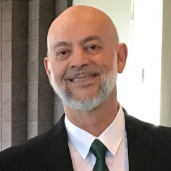
Dr. Gamal Hegazi earned his B.Sc. and M.Sc. in Electronics and Communications from the Faculty of Engineering of Ain Shams University, and his Ph.D. from the University of Massachusetts in Amherst, Massachusetts.
He held various research and technical leadership positions at Comsat Corporation, Motorola, Rockwell Collins, Aethercomm Frontgrade and Qorvo.
He has been President of Hegazi Consulting, LLC since its foundation in 2020, where he currently provides design and analysis services covering applied research and development in the microwaves and communications areas.
President
Hegazi Consulting, LLC
Topics on Recent Advances in MMIC Design and Applications in RF Systems
Click to view abstract
Modern RF transmit/receive (T/R) systems incorporate a wide range of MMIC technologies that implement critical functions throughout both the high-power transmit chain and the low-noise receive chain, extending operation into the millimeter-wave frequency spectrum.
This presentation reviews key MMIC building blocks and illustrates their integration within a representative Ka-band communication system architecture.
A millimeter-wave exciter is presented in which a digitally generated baseband waveform is converted to an analog signal and up-converted to Ka-band using a frequency mixer driven by a synthesized local oscillator.
The local oscillator is generated by a phase-locked loop (PLL), frequency multiplied, amplified, and filtered prior to the mixing stage. The transmitter utilizes this exciter to drive a power amplifier chain connected to the antenna through a transmit/receive (T/R) switching network.
On the receive side, the same antenna is shared through the T/R switch, feeding a low-noise amplifier (LNA) chain followed by frequency down-conversion and digitization for digital signal processing.
The RF front end interfaces with the digital baseband subsystem through a high-performance, wideband multi-channel transceiver chip integrating four RF-sampling transmit channels, four RF-sampling receive channels, and two RF-sampling feedback channels.
The presentation highlights recent advances in MMIC technologies for frequency generation, frequency conversion, amplification, switching, and system integration, demonstrating their role in enabling next-generation wideband communication systems.

Dr. Ali Darwish
Speaker
Beating the Self-Heating: Accurate Calculation, Measurement, and Thermal Management of Millimeter-Wave MMICs
Dr. Amin Ezzeddine
Click to view biography
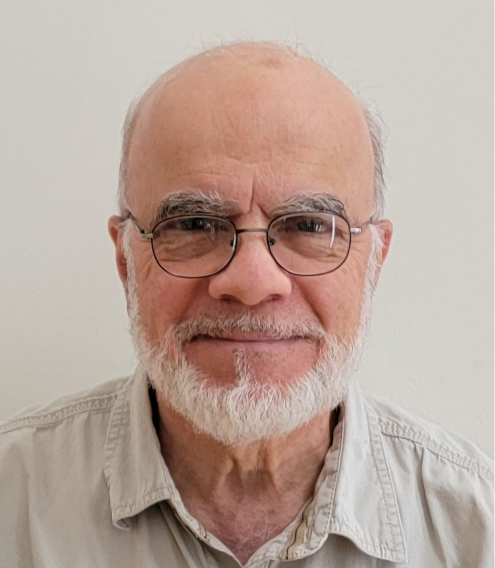
Amin Ezzeddine received his Bachelor of Science from Ain-Shams University, Cairo, in 1976, his Master and EE Degree from MIT in 1979, and the Doctor of Science degree (ScD) from MIT in 1983.
Dr. Ezzeddine is the President and Co-founder of AMCOM Communications, Inc. Prior to founding AMCOM Communications, he was with Microwave Signal, later acquired by M/A-COM.
He also worked with COMSAT Corporation for 10 years, where he held several management and research positions at COMSAT Laboratories and COMSAT RSI.
Dr. Ezzeddine has over 40 years’ experience in designing MMIC components and subsystems, over 30 published technical papers, and several microwave and millimeter-wave circuit patents.
President and Co-founder
AMCOM Communications, Inc.
MMIC Design Considerations
Click to view abstract
This talk presents the fundamental design considerations for monolithic microwave integrated circuits (MMICs), including realizability, impedance matching, electromagnetic coupling, stability, biasing, power efficiency, and thermal management.
It also discusses semiconductor process selection, device modeling, device design, and the inherent limitations of MMIC technology.
In addition, the presentation introduces non-traditional MMIC configurations and illustrates key design concepts through practical MMIC design examples.