IEEE IMAS 2026 Keynote Speakers
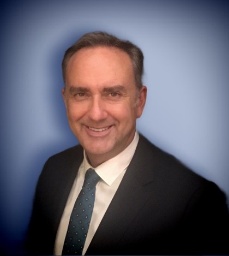
Prof. Stefano Maci
Click to view short bio
Stefano Maci is a Professor at the University of Siena (UNISI), with scientific responsibility for a research group of 15 researchers. He is also the Director of the UNISI PhD School of Information Engineering and Science, which presently includes about 60 PhD students.
His research interests include high-frequency and beam representation methods, computational electromagnetics, large phased arrays, planar antennas, reflector antennas and feeds, metamaterials, and metasurfaces.
Since 2000, Prof. Maci has been responsible for several projects funded by the European Union, including serving as WP Leader of the Antenna Center of Excellence (ACE, FP6-EU) from 2004 to 2007 and as International Coordinator of a 24-institution Marie Curie Action consortium from 2007 to 2010.
He has also carried out research projects supported by the European Space Agency (ESA-ESTEC), the European Defence Agency (EDA), the US Army Research Laboratory (ARL), and numerous international industries and research institutions.
Prof. Maci has served on the Technical Advisory Boards of international conferences, Review Boards of international journals, and has organized numerous special sessions and short courses for the IEEE Antennas and Propagation Society.
He has served as Associate Editor of IEEE Transactions on Electromagnetic Compatibility and IEEE Transactions on Antennas and Propagation, as well as Guest Editor of special issues. In 2003, he was elected a Fellow of IEEE.
In 2004, he founded the European School of Antennas (ESoA), a leading PhD school covering antennas, propagation, electromagnetic theory, and computational electromagnetics. The school brings together leading European research centers and experts in the field.
Prof. Maci has also been involved in NATO research activities and is currently involved in research related to metamaterials for defense and security applications.
He was co-founder of two spin-off companies and has served as honorary President of LEAntenne e Progetti SPA since 2008.
His research activity includes 10 book chapters, more than 100 papers in international journals, and approximately 300 papers in international conference proceedings. His research has received more than 2000 citations according to Google Scholar.
Professor of Electromagnetics & Antennas
University of Siena (UNISI), Italy
Metasurfaces and Metalenses: From Fundamentals to Intelligent Wavefront Engineering
Click to view abstract
Metasurfaces constitute a class of thin metamaterials that can be used from microwave to optical frequencies to create new electromagnetic engineering devices. They are obtained by a dense periodic texture of small elements printed on a grounded slab, with or without shorting vias.
Metasurfaces have been used for realizing electromagnetic bandgaps (EBG) and equivalent magnetic walls. By changing the dimensions of the elements while maintaining the same sub-wavelength two-dimensional periodicity, the structure produces a pixelated visual effect together with an electromagnetic modulation of the equivalent local reactance.
The resulting Modulated Metasurface Reactance (MMR) is able to transform surface or guided waves into different wavefield configurations with required properties. This MMR-driven wavefield transformation is referred to as “Metasurfing.”
The MMR allows a local modification of the dispersion equation and, at a constant operating frequency, a modification of the local wavevector. The resulting effects are similar to those obtained in volumetric inhomogeneous metamaterials as predicted by Transformation Optics, particularly in redirecting the propagation path of an incident wave, while providing significant technological simplicity.
When the MMR is covered by a top ground plane, forming a parallel-plate waveguide Metasurfing structure, the real part of the Poynting vector follows a generalized Fermat principle similar to ray-field propagation in an inhomogeneous solid medium. This concept can be used for designing lenses and point-source-driven beam-forming networks.
When the MMR is uncovered, wave propagation is accompanied by leakage. A surface wave is transformed into a leaky wave, and the structure itself becomes an extremely flat antenna.
Introducing slots into the printed elements enables polarization control. In these configurations, the metasurface can be described using an anisotropic surface impedance.
In this lecture, after introducing the design methodology of metasurfing-wave antennas, several examples are presented and discussed, including Luneburg lenses, Maxwell’s Fish-eyes, isoflux antennas, Doppler-guide antennas, and new transmission lines.
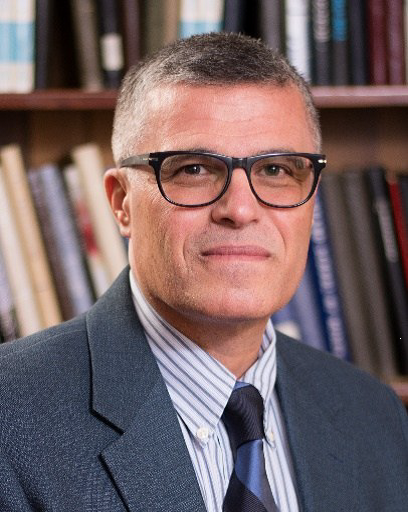
Prof. Atef Z. Elsherbeni
Click to view short bio
Atef Z. Elsherbeni is Professor of Electrical Engineering at Colorado School of Mines, where he joined as Dobelman Distinguished Chair Professor in 2013. He served as Interim Head of Electrical Engineering and Computer Science (2015–2016) and Head of Electrical Engineering (2016–2018). Previously, he was a faculty member at the University of Mississippi (1987–2013), attaining the rank of Professor in 1997 and serving as Associate Dean for Research and Graduate Programs (2009–2013).
He earned two honors B.Sc. degrees in Electronics and Communications (1976) and Applied Physics (1979), and an M.Eng. in Electrical Engineering (1982), all from Cairo University, followed by a Ph.D. in Electrical Engineering from the University of Manitoba (1987). His international appointments include visiting positions at UCLA, Magdeburg University, and Tampere University of Technology, and selection as a Finland Distinguished Professor in 2009.
Dr. Elsherbeni is a Life Fellow of IEEE, Fellow of the Applied Computational Electromagnetics Society (ACES), Editor-in-Chief of the ACES Journal, and served as ACES President (2013–2015) and General Chair of the 2014 IEEE APS–URSI Symposium. He was an IEEE Antennas and Propagation Society Distinguished Lecturer (2020–2023).
His honors include the 2023 IEEE APS Harrington–Mittra Award for contributions to hardware-accelerated computational electromagnetics and the 2025 ACES Computational Electromagnetics Award.
Professor, Electrical Engineering Department
Colorado School of Mines, Golden, Colorado, USA
Structured Electromagnetic Beams for Target Scattering and Characterization
Click to view abstract
Structured electromagnetic beams offer a powerful means of tailoring the spatial amplitude, phase, and polarization of an incident field, extending the possibilities for target interrogation beyond conventional plane-wave or fundamental Gaussian-beam illumination. Prominent examples include Laguerre–Gaussian (LG) and Hermite–Gaussian (HG) beams, whose modal structures are described by solutions of the paraxial wave equation. LG modes are indexed by radial and azimuthal orders and can exhibit helical phase fronts associated with orbital angular momentum (OAM). HG modes, by contrast, are characterized by two transverse indices and display distinctive Cartesian patterns of intensity lobes. These controllable field distributions provide additional degrees of freedom for electromagnetic sensing, imaging, and radar.
When a structured beam illuminates a target, the spatial variation of the incident field modifies the excitation of surface currents and, consequently, the scattered electromagnetic field. For LG illumination, the phase winding and, for nonzero azimuthal order, the on-axis intensity null can make the response particularly sensitive to target position, geometry, and orientation relative to the beam axis. HG modes distribute incident energy among spatially separated lobes, enabling different regions of a target to be emphasized. In both cases, the observed scattering depends jointly on the target properties and the selected beam mode; these effects must therefore be interpreted in the context of the incident illumination.
This keynote examines how beam order, waist size, focal position, polarization, and target placement influence induced currents and the angular distribution and modal characteristics of scattered fields. It also discusses how computational electromagnetics, such as the finite-difference time-domain (FDTD) method, can be used to analyze these interactions and compare structured-beam responses with those obtained under more conventional excitation. Particular attention is given to measurable far-field scattering signatures.
By viewing the illumination pattern itself as a design variable, structured-beam scattering offers a promising route toward richer target signatures and potentially improved detection, discrimination, and classification. Realizing these benefits will require careful selection of beam parameters, rigorous electromagnetic modeling, and assessment against conventional illumination under comparable operating conditions. The talk highlights the physical mechanisms, modeling considerations, and opportunities that make structured electromagnetic beams an emerging tool for advanced radar and remote sensing.
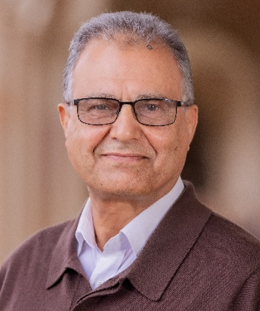
Prof. Amin Abbosh
Click to view short bio
Prof. Amin Abbosh is a Fellow of the IEEE and Professor at The University of Queensland (UQ), Australia, where he leads the Electromagnetic Innovations (ƐMAGIN) research group.
Throughout his career, he has served as Head of the UQ School of Information Technology and Electrical Engineering, Director of Research, Director of Research Training, Director of the Medical Electromagnetic Imaging Cooperative Research Centre, and a member of the UQ Academic Board.
He is also a member of the Australian Research Council College of Experts and the chief inventor on more than 20 patents licensed to the medical industry, forming the core intellectual property of two Australian MedTech companies.
Prof. Abbosh has authored more than 600 refereed journal and conference publications covering electromagnetic theory, applied research, and industrial innovation.
His honors include receiving the IEEE APS King Prize twice, multiple University of Queensland Excellence Awards in Leadership, Research, Entrepreneurship, and PhD Supervision, as well as several Best Paper Awards at leading international conferences.
Professor & IEEE Fellow
The University of Queensland (UQ), Australia
Medical Microwave Imaging: From Electromagnetic Physics to Physics-Integrated AI
Click to view abstract
Medical microwave imaging has emerged as a promising, safe, low-cost, and portable alternative or complement to conventional medical imaging techniques. Advances in antenna technology, microwave sensing, computational electromagnetics, inverse scattering, and imaging algorithms have significantly improved its clinical potential.
This keynote reviews the evolution of medical microwave imaging from its electromagnetic foundations, highlighting the major scientific advances, remaining challenges, and the importance of physics-based modeling for reliable imaging, detection, and diagnostic performance.
The presentation introduces the emerging concept of physics-integrated artificial intelligence, where data-driven AI techniques are combined with electromagnetic models to improve image reconstruction, enhance robustness, reduce computational complexity, and enable real-time clinical decision support.
Drawing on recent research achievements, the talk demonstrates how integrating electromagnetic physics with AI is transforming medical microwave imaging and accelerating its translation from laboratory research into practical healthcare applications.
The keynote concludes with an outlook on future research opportunities and the next generation of intelligent microwave imaging systems that combine physics and artificial intelligence to deliver more accurate, reliable, and accessible healthcare solutions.
Industry Keynote Speakers
Eng. Adel Alzogaiby
Click to view short bio
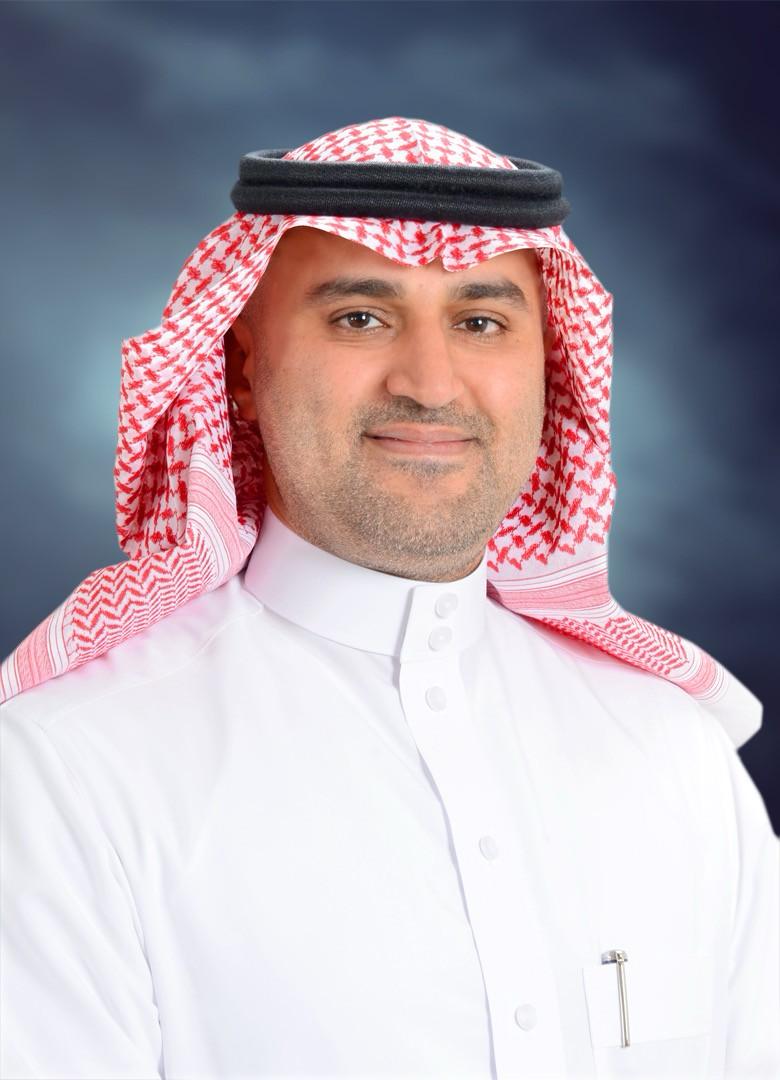
Adel Alzogaiby holds a B.Eng. in Electronics and Communications Engineering from King Saud University (KSU), Saudi Arabia, obtained in 2004, and an M.Sc. in Electronics Engineering from the University of Stellenbosch, South Africa, obtained in 2014.
He began his career in 2005 as a Radar Engineer at King Abdulaziz City for Science and Technology (KACST), Saudi Arabia, where he contributed to various defense research and development projects in collaboration with international organizations. His expertise spans radar systems engineering, waveform design and analysis, and radar signal and data processing.
In 2015, Adel joined PSDSARC, Saudi Arabia, initially as the Department Head of Defense Modelling and Simulation, later advancing to Director of the Radar and Communications Systems Lab. In this role, he led the technical management of various research and development projects, including passive radar and Counter-Unmanned Aerial Systems (C-UAS).
From 2022 to 2024, he served as Chief Engineer of Air Defense Systems at the Saudi Arabian Military Industries (SAMI). His work focused on the development of advanced air defense capabilities and strategic collaboration between industry, universities, and research centers in the field of Defense Electronics.
Today, he serves as the General Supervisor of the Technical Development Sector at PSDSARC, where he leads the development of local capabilities in Radar, Electronic Warfare (EW), and Unmanned Systems.
General Supervisor of the Technical Development Sector
PSDSARC, Saudi Arabia
Drone Warfare: Emerging Engineering Challenges and the Role of RF, Microwave, and Antenna Technologies
Click to view abstract
The rapid evolution of drone warfare is reshaping modern conflict, as low-cost, commercially available unmanned systems increasingly challenge traditional approaches to surveillance, air defense, electronic warfare, communications, and precision engagement.
As drones advance toward greater autonomy, coordination, and mass deployment, the competition between offensive and counter-UAS capabilities is intensifying. Key technical challenges include detecting and classifying small, low-RCS and RF-silent drones in complex environments, ensuring resilient communications under electronic attack, operating without GNSS, coordinating large-scale drone swarms, and countering saturation attacks in a cost-effective and scalable manner.
Many of these problems lie within the microwave, RF, and antenna domains, driving new research opportunities in distributed and passive radar, electronic warfare, adaptive antennas and digital beamforming, resilient and low-probability-of-intercept communications, RF-based navigation, sensor fusion, high-power microwave systems, and spectrum management.
This keynote highlights how the evolving drone battlefield is creating a new generation of technology that will significantly influence future sensing, communications, electronic warfare, and air-defense architectures, while opening a major research frontier for the IMAS community.

Dr. Issam Maaz
Click to view short bio
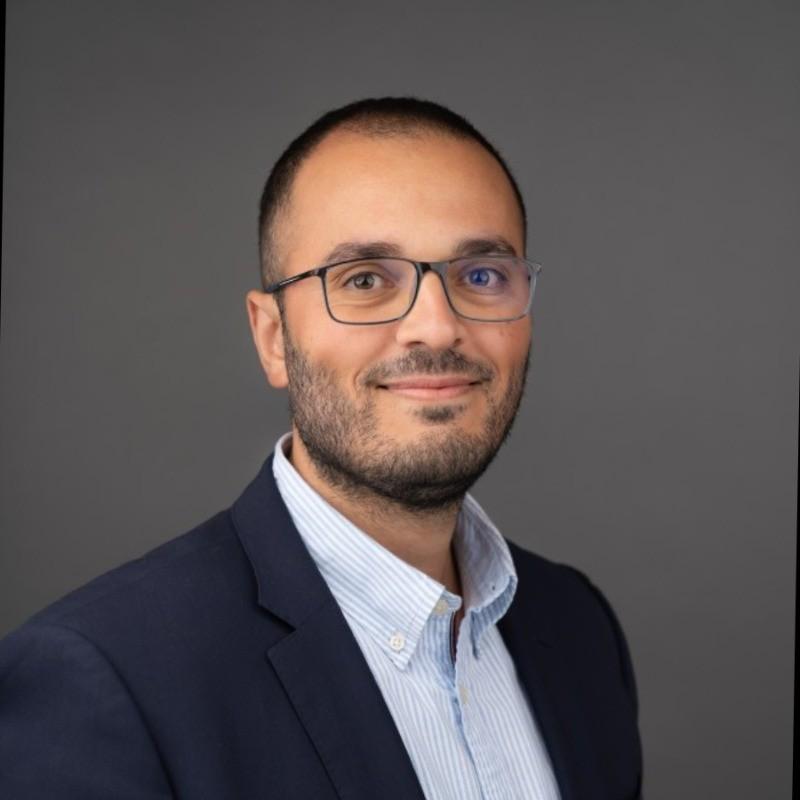
Dr. Issam Maaz is the Head of Advanced Research for the Middle East at Keysight Technologies, where he leads strategic initiatives in 6G, quantum technologies, and other emerging domains. A communications engineering researcher, he specializes in wireless networks, channel modeling, and the design of next-generation communication systems.
Before joining Keysight, Issam served for several years as an Assistant Professor, teaching and leading research in emerging 5G/6G technologies. His industry experience also includes research and development projects on advanced communication systems at Orange Labs in France.
Issam earned his PhD in Electronics and Communication Engineering from Télécom Paris in 2015. His work bridges theoretical research and practical implementation, supporting innovation and the development of future communication systems across the Middle East.
Head of Advanced Research for the Middle East
Keysight Technologies
AI-Native Non-Terrestrial and ISAC-Enabled 6G Networks: Toward Intelligent Non-Terrestrial Connectivity
Click to view abstract
This talk explores the latest advances in AI-native 6G systems, with a particular focus on Non-Terrestrial Networks (NTN) and Integrated Sensing and Communication (ISAC).
It will examine how the convergence of artificial intelligence, non-terrestrial connectivity, and sensing and communication technologies is shaping the evolution of future 6G networks.
The presentation will highlight the latest technological developments, open challenges, and key research directions related to NTN, ISAC, and AI-native 6G systems.
Particular attention will be given to the opportunities and challenges of enabling intelligent, resilient, and highly integrated non-terrestrial connectivity, providing new capabilities for future wireless communication and sensing applications.

C.J. Reddy
Click to view short bio
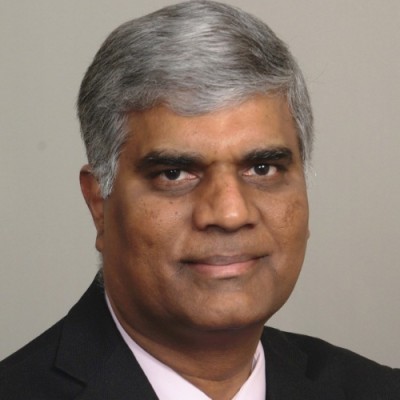
C.J. Reddy is President of the IEEE Antennas and Propagation Society and is affiliated with Siemens, USA. He is an IEEE Fellow, as well as a Fellow of the Applied Computational Electromagnetics Society (ACES) and the Antenna Measurement Techniques Association (AMTA).
He has extensive experience in computational electromagnetics, antenna analysis, simulation, and antenna measurement techniques. He previously served as Vice President of Business Development–Electromagnetics for the Americas at Altair, where he led initiatives in electromagnetic simulation and antenna technologies.
Dr. Reddy has also contributed to research and development at NASA Langley Research Center and served as Research Professor at Hampton University. His professional work includes antenna placement, co-site analysis, electromagnetic simulation, and advanced antenna technologies.
He received his B.Tech. degree in Electronics and Communication Engineering from the National Institute of Technology, Warangal, and his M.Tech. and Ph.D. degrees in Electrical Engineering from the Indian Institute of Technology, Kharagpur.
IEEE AP-S President & Fellow at SIEMENS
Siemens

Eng. Ahmed Shafqat
Click to view short bio
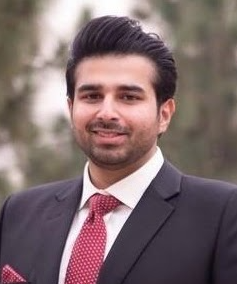
Mr. Ahmed Shafqat has a Master’s degree in Electrical Engineering with specialization in RF and Microwave from National University of Sciences and Technology (NUST), Islamabad.
He joined NUST as Faculty member in 2011 and taught RF & microwave related courses to Electrical Engineering students. During his stay he was also responsible for research and measurements activities at Anechoic Chamber Lab and EMC/EMI Lab.
He joined Rohde & Schwarz Middle East and Africa (MEA) in 2019 as an application specialist and is technical lead for high product and solutions of Test and Measurement domain.
He is responsible for delivering technical training and supporting Pre-sales and Post-sales activities related to Test and Measurement solutions.
He is an IEEE Senior Member and member of IEEE EMC TC1 (Technical Committee 1).
Application Specialist & Technical Lead
Rohde & Schwarz Middle East and Africa (MEA)
Testing Challenges of a mm-Wave RF Imager
Click to view abstract
This talk will cover mm-Wave imagers measurement techniques, setups, and solutions for their characterization.
It will cover challenges in measurement system which contributes to the measurement error and their mitigation techniques.

Dr. Abdullah Alshehri
Click to view short bio
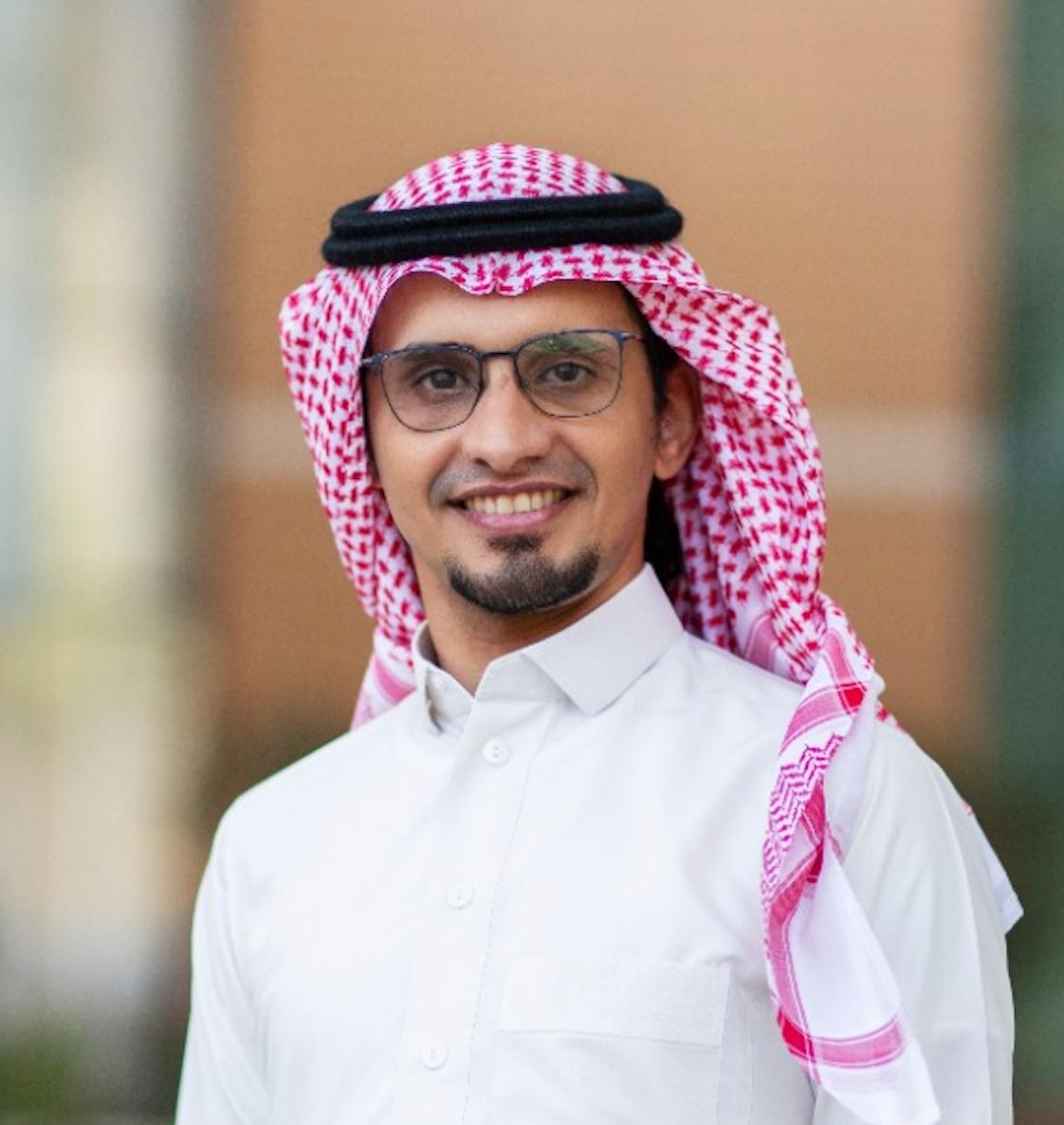
Dr. Abdullah earned his undergraduate degree from the University of Brighton and pursued both his Master’s and PhD at King Abdullah University of Science and Technology (KAUST), specializing in circuit design and developing low-power, high-performance ASICs for MEMS sensors.
He is currently an Assistant Professor at Umm Al Qura University and serves on the KAUST Saudi Alumni Executive Committee.
Dr. Abdullah has authored and co-authored more than 10 research papers, co-founded TRYSL Tech and DeepCARES, and leads the Business Development Unit at the Saudi Electronics Material Company.
He has professional experience collaborating with Aramco, STC, and Cadence.
Business Development Unit Manager
Saudi Electronic Materials Company (SEMC)
From Sand to Signals: SEMC’s Role in Enabling RF and Emerging Technologies
Click to view abstract
Saudi Electronic Materials Company (SEMC) plays an important role in advancing Saudi Arabia’s semiconductor capabilities and supporting the Kingdom’s transition from technology adoption to local innovation and manufacturing.
This presentation will provide an overview of SEMC’s journey, organizational departments, current products, future development roadmap, and technical capabilities across the semiconductor value chain.
The presentation will highlight SEMC’s expertise and infrastructure in device design, microfabrication, packaging, dicing, wire bonding, testing, and characterization, with particular emphasis on MEMS, infrared detectors, and CMOS-related technologies.
It will also explore how these capabilities can support the development of radio-frequency and other emerging technologies, from early-stage research and prototyping to product development and manufacturing.
Potential areas of contribution include wireless communication, advanced sensing, autonomous systems, aerospace, industrial monitoring, and intelligent connected devices.
Through collaboration with universities, research institutions, industry partners, and technology developers, SEMC aims to accelerate the translation of innovative ideas into locally developed products, strengthen knowledge transfer and talent development, and contribute to building a sustainable semiconductor ecosystem in Saudi Arabia.