IEEE IMAS 2026 WIE Research Forum
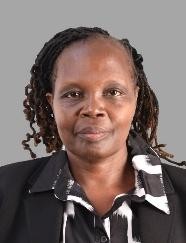
Dr. Mary Ahuna
Click to view short bio
Dr. Mary Ahuna is a lecturer and researcher in the Department of Electrical and Electronic Engineering at the Technical University of Kenya (TUK), where she also serves as the Chair of the Department.
She is the current Chair, IEEE Kenya Section, where she provides strategic leadership in advancing engineering, technology, research, and professional development across Kenya and the wider IEEE community.
Dr. Ahuna holds postgraduate qualifications in Electrical and Electronic Engineering, with specialization in Telecommunications Engineering.
Her research interests focus on radio wave propagation, wireless communication systems, microwave engineering, antenna technologies, propagation modelling, and the application of artificial intelligence to next-generation communication networks.
As an active IEEE volunteer for many years, Dr. Ahuna has held several leadership positions and is committed to promoting technical excellence, international collaboration, and diversity within the engineering profession.
She is particularly passionate about mentoring young engineers and empowering women to pursue careers in microwave engineering, antennas, wireless communications, and related STEM disciplines. She is also a mentor for Girls in Engineering (Gn3), a Kenya-based non-profit network supporting female engineering students and recent graduates through mentorship, career talks, and hands-on social impact projects.
Lecturer, Researcher & IEEE Kenya Section Chair
Technical University of Kenya (TUK), Kenya
Women Driving the Future of Microwave and Antenna Technologies: From Research to Real-World Impact
Click to view abstract
Currently, microwave and antenna technologies are at the forefront of enabling next-generation wireless communications, satellite systems, radar, remote sensing, biomedical imaging, autonomous transportation, and emerging 6G networks.
As these technologies continue to evolve, the role of women in advancing research, innovation, and technological leadership has become increasingly significant. Despite notable progress, women remain underrepresented in many areas of microwave engineering, highlighting the need for greater participation, visibility, and leadership within the field.
This poster explores the growing contributions of women in transforming fundamental research into practical engineering solutions with societal impact. It highlights success stories from academia, industry, and professional organizations, demonstrating how women are driving innovation in antenna design, radio-frequency (RF) systems, microwave sensing, artificial intelligence-enabled wireless systems, and space communications.
The poster also examines the importance of mentorship, interdisciplinary collaboration, and international partnerships in developing the next generation of women engineers and researchers.
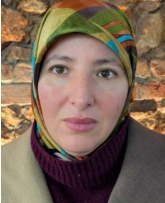
Mariem AZNABET
Click to view short bio
Mariem Aznabet received the D.E.S.A. degree in telecommunications systems from Abdelmalek Essaâdi University, Tétouan, Morocco, in 2005, and the M.Sc. and Ph.D. degrees in telecommunication engineering from the Public University of Navarre, Pamplona, Spain, in 2008 and 2009, respectively.
She is currently a Professor of Electronics and Telecommunications at Abdelmalek Essaâdi University, Morocco.
Her research interests include metamaterials and metasurfaces, frequency-selective surfaces, microwave and RF engineering, antenna design, MIMO antenna systems, and electromagnetic sensing.
Professor of Electronics & Telecommunications
Abdelmalek Essaâdi University, Morocco
Metamaterials for Advanced Antennas and Microwave Sensing: From Performance Enhancement to Innovative Sensing Applications
Click to view abstract
Metamaterials and metasurfaces provide powerful approaches for manipulating electromagnetic waves (EM) and improving the performance of microwave antennas and sensors.
This talk presents recent developments in the use of engineered electromagnetic structures for both advanced antenna systems and microwave sensing applications. For antenna applications, metamaterial- and metasurface-based concepts are explored to enhance gain and directivity, enable beam steering and circular polarization, and reduce mutual coupling in compact MIMO configurations.
In particular, near-zero-index metamaterials and resonant metasurfaces demonstrate significant potential for controlling radiation and improving antenna performance.
The talk also highlights the potential of split-ring-resonator-based microwave sensors for biomedical and biological sensing. By exploiting strong electromagnetic field localization and sensitivity to dielectric perturbations, these structures enable highly sensitive detection using very small sample volumes.
Applications include aqueous glucose sensing, where localized field enhancement enables detection of small concentration variations, as well as microfluidic biosensing for single-particle detection, spatial localization, and differentiation between live and dead E. coli cells.
Together, these examples demonstrate how metamaterial-inspired structures can serve as versatile platforms for next-generation wireless communication and sensing technologies.
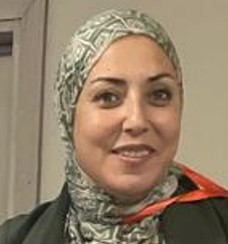
Dr. Dalia Nashaat Elsheakh
Click to view short bio
Dr. Dalia Mohammed Nashaat Elsheakh is a Professor of Electrical Engineering and Head of the Electrical Engineering Department and Quality Center at El Sewedy University of Technology, Egypt.
She earned her B.Sc. from Ain Shams University in 1998, M.Sc. in Electromagnetic Waves in 2004, and Ph.D. in 2010 on EBG structures for microstrip antennas, completed jointly with the University of Hawaii’s Hawaii Center for Advanced Communications.
She spent much of her career at the Electronics Research Institute, rising from Research Assistant to Associate Professor, before moving into leadership roles at El Obour Institute of Engineering, Badr University, and ultimately El Sewedy University of Technology.
Her research covers microstrip and printed antennas, EBG and metamaterial structures, RF energy harvesting, and microwave biosensors for healthcare, including glucose monitoring, cancer detection, and vital-signs sensing, often integrated with machine learning.
She has authored more than 120 journal articles, 60 conference papers, and six book chapters, and holds two patents. She has received more than 2,250 citations and has an h-index of 22.
Dr. Elsheakh is a Senior IEEE Member and Vice Chair of the IEEE Antennas and Propagation Chapter. She also serves as a guest editor for the International Journal of Antennas and Propagation and reviews for major IEEE journals.
She has contributed to 18 funded projects supported by ASRT, STDF, NTRA, and NSF, and currently leads an ITAC-funded project as Principal Investigator. Her honors include the Egyptian Government Encouragement Prize and multiple Best Researcher awards.
Professor of Electrical Engineering
El Sewedy University of Technology, Egypt
Electrical Engineering Women in Egypt and Research: Breaking Barriers, Building Impact
Click to view abstract
Women have played an increasingly vital role in shaping Egypt’s electrical engineering and research landscape, yet their journey is often marked by unique academic, professional, and cultural challenges.
This talk explores the evolving presence of women in electrical engineering research in Egypt — from academia to applied R&D — drawing on decades of firsthand experience navigating leadership roles in electromagnetics, antenna design, and biomedical microwave sensing research.
The session will highlight the contributions of Egyptian women researchers to national and international scientific communities, discuss the structural and cultural barriers still faced in STEM fields, and share strategies for building successful research careers, securing funding, mentoring the next generation, and balancing academic leadership with technical innovation.
Special attention will be given to the role of professional bodies such as IEEE Women in Engineering (WIE) in providing mentorship, networking, and visibility for women engineers.
The talk aims to inspire young female engineering students and early-career researchers by demonstrating that technical excellence, research impact, and leadership are attainable and mutually reinforcing goals — encouraging greater participation of women in electrical engineering research across Egypt and the wider MENA region.
Prof. Ir. Dr. Fauziahanim Che Seman
Click to view short bio
Prof. Ir. Dr. Fauziahanim Che Seman received her B.Eng. in Electrical Communication Engineering from Universiti Teknologi Malaysia in 2001, her M.Eng. from Universiti Tun Hussein Onn Malaysia (UTHM) in 2003, and her Ph.D. from Queen’s University Belfast, United Kingdom, in 2011.
She is currently a Professor and Head of the Research Center for Applied Electromagnetics (EMCenter) at UTHM.
Her research interests include THz material sensing, sub-THz communication systems, metamaterials and frequency selective surfaces, antenna design and propagation, and AI-enabled wireless communication systems.
She has published extensively in international journals and conferences and holds several patents in wireless and electromagnetic technologies.
Prof. Fauziahanim has actively contributed to the IEEE community through leadership roles as General Chair, Technical Chair, Publication Chair, and organizing committee member for numerous IEEE international conferences, including APMC, RFM, APACE, AWPT, and ISAP.
She served as Chair of the IEEE AP/MTT/EMC Joint Chapter, IEEE Malaysia Section, from 2017 to 2020, and currently chairs the AP Technical Meeting of the chapter.
She is also an active member of the IEEE MTT-S Women in Microwaves (WiM) Subcommittee and has organized WiM Special Sessions and served as a panelist and moderator in IEEE Women in Engineering (WIE) and Women in Microwaves (WiM) sessions at IEEE flagship conferences.
Her professional activities focus on advancing technical excellence, promoting diversity and inclusion, and inspiring the next generation of engineers through research, leadership, and community engagement.
Professor & Head of Research Center for Applied Electromagnetics
Universiti Tun Hussein Onn Malaysia (UTHM), Malaysia
Engineering the Future of Connectivity: Advancing 6G Innovation through Research, Leadership, and Women in Microwaves
Click to view abstract
This talk shares my journey as a researcher, IEEE volunteer, and advocate for Women in Microwaves (WiM). It introduces my research in terahertz communications, metamaterials, antennas, AI-enabled wireless systems, and IoT technologies that support future 6G networks and real-world applications.
The poster also highlights my experiences in IEEE through conference leadership, technical activities, and active involvement in the IEEE MTT-S Women in Microwaves (WiM) Subcommittee and IEEE Women in Engineering (WIE).
This includes organizing WiM Special Sessions, participating in panel discussions at IEEE flagship conferences, and promoting collaboration across Malaysia, ASEAN, and IEEE Region 10.
The talk concludes by discussing how IEEE provides opportunities for professional growth, leadership, networking, and collaboration while encouraging more women and young researchers to contribute to the future of microwave engineering and wireless communications.
Dr. Mahrukh Khan
Click to view short bio
Dr. Mahrukh Khan is an Associate Professor in the Electrical and Computer Engineering Department at The College of New Jersey (TCNJ), where she is also Director of the Microwave and Wireless Communication Lab.
She received her Bachelor of Science and Master of Science degrees in Electrical Engineering from the University of Engineering and Technology, Lahore, Pakistan, in 2007 and 2011. She received her Ph.D. degree in Electrical Engineering from the University of Missouri-Kansas City (UMKC), USA, in 2017.
Following her Ph.D., she worked as a Post-Doctoral Fellow in the Nano and Micro Electronics Lab at UMKC and later served as an Assistant Research Professor at the Missouri Institute of Defense and Energy (MIDE).
Dr. Khan has published more than 30 journal articles and conference papers in renowned journals and peer-reviewed conferences in her field of research.
Her honors include the TCNJ Early Career Faculty Excellence Award in 2024 and the UMKC Outstanding Graduate Student Award in 2016. In 2022, she received an NSF Engineering Research Initiative (ERI) grant to work on design challenges of microstrip antennas using surface current optimization.
Dr. Khan was selected as an IEEE AP-S Young Professional Ambassador in 2022. She is a member of the IEEE AP-S Young Professional Committee and IEEE AP-S Technical Committee on Wireless Communications (TC-8).
She also serves as Chair of the IEEE APS/MTT/ED Joint Chapter, Princeton/Central Jersey Section.
Associate Professor & Director, Microwave and Wireless Communication Lab
The College of New Jersey (TCNJ), USA
Role of Surface Current Optimization in the Future of Antenna Design Procedures
Click to view abstract
Microstrip antennas are in high demand for several emerging applications, such as biomedical devices, ultrawideband communication devices, IoT devices, and radar applications. Current design procedures lack detailed insight into radiation behavior and surface currents, leading to computationally intensive processes and heavy dependence on server-based simulation capabilities.
These processes require considerable time and lengthy computation cycles to develop an antenna array. With the increased pressure of product development, little attention has been paid to revamping existing design procedures to lower costs and improve array performance.
Theory of Characteristic Modes (TCM) is a powerful analysis technique that makes antenna structures easier to understand. Because it provides physical insight into the antenna’s structure, antenna analysis and design may require fewer optimization cycles.
This method’s success stems from the user-friendly details it provides about the antenna’s surface-current behavior. The Characteristic Mode theory (CMT) makes antenna design easier, as it does not depend heavily on personal experience or brute-force optimization.
Its ability to represent conducting structures through finite current modes in a systematic way not only helps decouple antenna elements and suppress cross-polarization and higher-order modes, but also makes it an attractive tool for reducing product costs.
This talk will discuss:
(a) Recent advances in antenna design procedures via surface current optimization.
(b) How CMA reduces the complexity and optimization time of antenna design procedures.
(c) Bridging the gap between the unpredictability of a lossless infinite ground plane and a lossy finite ground plane.
Dr. Rachida Bedira
Click to view short bio
Rachida Bedira was born in Téboulba, Tunisia, in 1975. She received her Ph.D. degree in 2006 from the Faculty of Sciences of Tunis, Tunis El Manar University, Tunisia.
Since 2001, she has been a member of the Department of Physics at the Faculty of Sciences, University of Tunis El Manar, Tunisia, where she is currently an Associate Professor.
She teaches courses including Electronics, Antennas and Propagation, Transmission Lines, and Metrology in the graduate course of Electrical Engineering, as well as Numerical Methods and Electronic Systems in the Master’s degree program in Electronics.
Dr. Bedira’s main research interests include computational electromagnetics, modeling of electromagnetic scattering problems, SIW circuits, smart antennas, microwave and wireless components, biosensors, and metasurfaces.
She has contributed to the organization of several national and international scientific events and was a member of the organizing committee of the Mediterranean Microwaves Symposium (MMS2011, MMS2019, and MMS2023).
She is the coordinator of INNOHACK, editions 2024 and 2025, and currently serves as coordinator and supervisor of the IEEE FST Student Brunch. She has also served as IEEE Student Branch Counselor for TSYP11, TSYP12, and TSYP13.
In 2024, Dr. Bedira became co-organizer of the IEEE MTT-S/AP-S Tunisia Tech Days 2024. She is the elected Chair of the MTT-S Tunisia Chapter for 2025–2026 and a member of the IEEE MTT-S BPC Africa Initiative.
Associate Professor & Chair, MTT-S Tunisia Chapter
Faculty of Sciences, University of Tunis El Manar, Tunisia
Her Skills in Microwaves: Women in Engineering Inspiring the Next Generation
Click to view abstract
This presentation highlights the skills, experiences, and contributions of women engineers in the field of microwave engineering, with a particular focus on inspiring and empowering the next generation.
Through academic research, teaching, professional leadership, and active engagement within the IEEE community, the presentation showcases how women are contributing to the advancement of microwave technologies and creating opportunities for young engineers.
The talk emphasizes the importance of technical expertise, mentorship, collaboration, and professional involvement in encouraging young women to pursue careers in microwaves, antennas, electromagnetics, and related engineering disciplines.

Dilaawaiz Fazal
Click to view short bio
Dilaawaiz Fazal is a Research Engineer at the Institut de recherche en systèmes électroniques embarqués (ESIGELEC), Rouen, France.
She received her B.Sc. degree in Electrical Engineering from UET, Peshawar, Pakistan, in 2008, and her M.S. and Ph.D. degrees in Electrical Engineering (RF and Microwave) from the National University of Sciences and Technology (NUST), Islamabad, Pakistan, in 2012 and 2022, respectively.
She has previously worked as a Postdoctoral Researcher at Reykjavik University, Iceland, and Kongju National University, South Korea.
Her research interests include antenna design, Characteristic Mode Analysis, reconfigurable intelligent surfaces (RIS), metasurfaces, electronically scanned arrays, and RF phase shifters.
She has published 14 journal and conference papers in international peer-reviewed venues, including IEEE journals and conferences.
Her current research focuses on low-loss varactor-based RF phase shifters and reconfigurable antenna systems for next-generation wireless connectivity.
Research Engineer
ESIGELEC, Rouen, France
Reconfigurable Phased-Array Antennas for Next-Generation Wireless Communications in Africa
Click to view abstract
Reconfigurable phased-array antennas are emerging as a key technology for future wireless communication systems, offering dynamic beam steering, adaptive coverage, and improved spectral and energy efficiency.
This talk will explore the potential of reconfigurable phased arrays for next-generation wireless connectivity in African countries, with particular emphasis on 5G/6G, satellite communications, and connectivity in underserved and rural regions.
The challenges of developing affordable, low-power, and compact reconfigurable arrays for these environments will be discussed, including antenna and phase-shifter design and beamforming.
The talk will also highlight emerging research directions toward flexible and cost-effective phased-array architectures that can support the diverse connectivity requirements of future African communication networks.