IEEE IMAS 2026 Microwave Imaging and Inversion Workshop
Microwave Imaging and Inversion Workshop
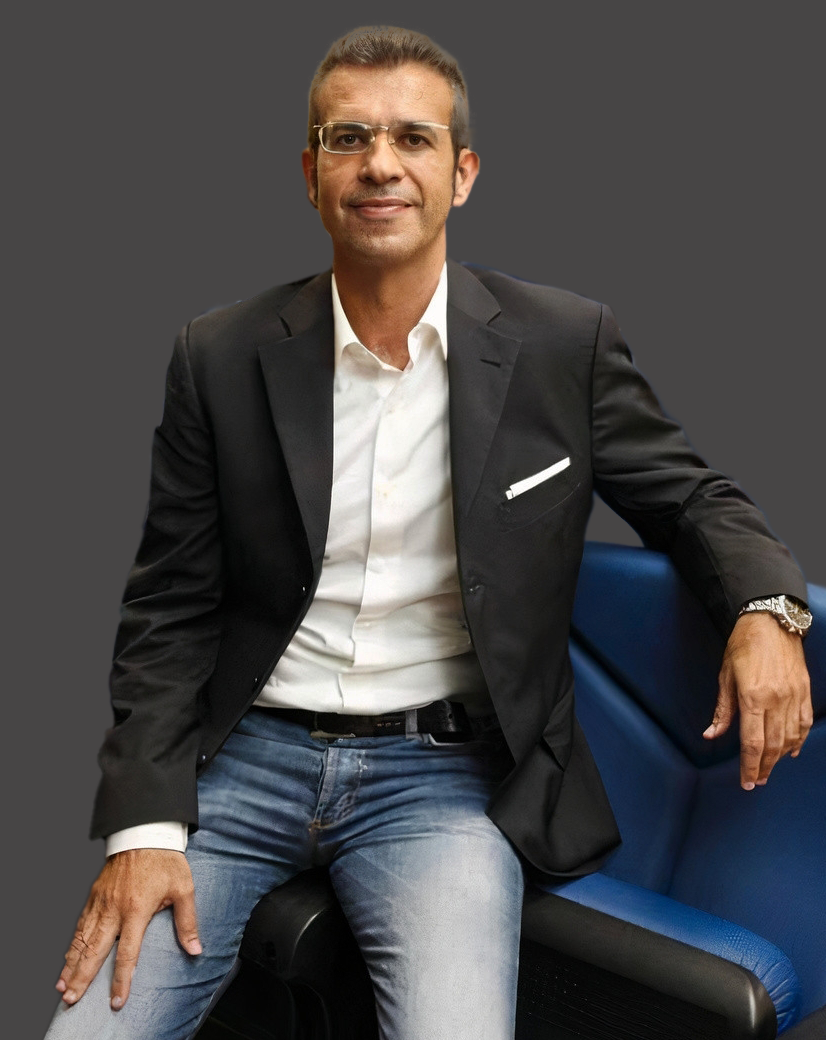
Prof. Andrea Massa
Click to view short bio
Andrea Massa (IEEE Fellow, IET Fellow, Member of the Academia Europaea, Electromagnetic Academy Fellow).
At present, Prof. Massa is the director of the network of 19 federated laboratories “ELEDIA Research Center”, Full Professor of Electromagnetic Fields at the University of Trento, holder of a Chang-Jiang Chair Professorship at UESTC (Chengdu, China), Visiting Research Professor at the University of Illinois at Chicago (Chicago, USA), and Distinguished Visiting Professor at Tsinghua (Beijing, China).
His research activities are mainly concerned with inverse problems, antenna analysis and synthesis, radar systems and signal processing, cross-layer optimization and planning of wireless/RF systems, system-by-design and material-by-design, and optimization techniques for engineering problems.
Full Professor of Electromagnetic Fields & IEEE Fellow
University of Trento, Italy
ELEDIA Research Center
AI-Based Computational Methods for Biomedical Imaging and Diagnostics
Click to view abstract
Artificial Intelligence (AI) is playing an increasingly central role in the advancement of biomedical imaging and diagnostic systems. By combining advanced computational models with medical imaging data, AI-based methods, encompassing Machine Learning methods (MLs), optimization techniques (OTs), and their integration in hybrid models, are enabling faster, more accurate, and non-invasive diagnostics.
While ML techniques are widely used for tasks such as classification, segmentation, and feature extraction due to their ability to automatically learn spatial hierarchies of features from imaging data, OTs play a dual role since they are not only used directly for tasks like biomedical scatterers reconstruction, parameter tuning, and feature selection, but are also combined with ML architectures to enhance training efficiency and reduce the reconstruction time from biomedical sensing data.
More specifically, the combination of learning- and optimization-based approaches offers a flexible and robust framework for addressing the complexity of biomedical imaging in different applications from various modalities such as MW, MRI, CT, ultrasound, and PET.
Ultimately, the synergy between these AI paradigms is contributing to the development of intelligent, personalized diagnostic tools, capable of supporting clinical decision-making with greater precision, adaptability, and interpretability—paving the way toward smarter and more patient-centered healthcare systems.
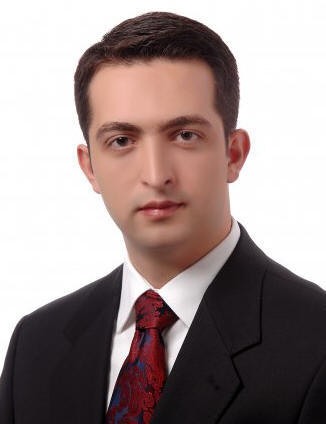
Prof. Abdulkadir Yucel
Click to view biography
Abdulkadir C. Yucel is an Assistant Professor in the School of Electrical and Electronic Engineering at Nanyang Technological University (NTU), Singapore.
His research lies at the intersection of computational electromagnetics, electromagnetic sensing and imaging, and artificial intelligence.
Dr. Yucel received his Ph.D. in Electrical Engineering from the University of Michigan, Ann Arbor, and conducted postdoctoral research at the University of Michigan, Massachusetts Institute of Technology (MIT), and King Abdullah University of Science and Technology (KAUST).
His recent research includes AI-powered radar systems, deep learning-based electromagnetic surrogate models, and fast computational electromagnetics methods based on FFT, FMM, butterfly, and tensor techniques.
He is a recipient of the Fulbright Fellowship (2006), the IEEE Transactions on Power Electronics Prize Paper Award (2024), and the ACES Technical Achievement Award (2026).
He is a Senior Member of IEEE and serves as an Associate Editor for IEEE Antennas and Propagation Magazine and the IEEE Journal on Multiscale and Multiphysics Computational Techniques.
He has authored over 160 peer-reviewed publications.
Assistant Professor
Nanyang Technological University (NTU), Singapore
Physics-Informed AI for Intelligent Radar Sensing and Fast Computational Electromagnetics
Click to view abstract
Electromagnetic technologies underpin a wide range of sensing, imaging, biomedical, and integrated-circuit applications.
However, their practical deployment is often limited by reliable interpretation of electromagnetic measurements and the high computational cost of accurate electromagnetic simulation.
In this talk, I will present recent advances in physics-informed artificial intelligence that address these challenges through the integration of electromagnetic physics, signal processing, computational methods, and learning.
The first part focuses on intelligent radar sensing and imaging, with emphasis on radar systems for non-invasive inspection.
I will present recent work on AI-powered tree-trunk radar for rapid defect detection and imaging and tree-root radar for three-dimensional subsurface mapping.
The second part focuses on fast computational electromagnetics. I will present deep learning-based electromagnetic surrogate models that enable near-real-time prediction of electromagnetic responses.
I will also discuss fast physics-based computational electromagnetics solvers accelerated through FFT, FMM, butterfly, and tensor techniques.
Together, these developments illustrate how physics-informed AI and fast computational electromagnetics can work synergistically toward intelligent, accurate, and real-time electromagnetic sensing and simulation.
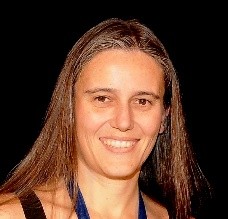
Prof. Francesca Vipiana
Click to view biography
Francesca Vipiana received the Laurea and Ph.D. degrees in electronic engineering from the Politecnico di Torino, Torino, Italy, in 2000 and 2004, respectively, with doctoral research carried out partly at the European Space Research Technology Center, Noordwijk, The Netherlands.
From 2005 to 2008, she was a Research Fellow with the Department of Electronics, Politecnico di Torino. From 2009 to 2012, she was the Head of the Antenna and EMC Laboratory, Istituto Superiore Mario Boella, Torino.
Since 2012, she has been an Assistant Professor with the Department of Electronics and Telecommunications, Politecnico di Torino, where she has been an Associate Professor since 2014 and a Full Professor since 2021.
Her main research activities concern numerical techniques based on integral equations and method of moments, with a focus on multiresolution and hierarchical schemes, domain decomposition, preconditioning and fast solution methods, advanced quadrature integration schemes, and analysis of glide-periodic structures.
Her research interests also include the modeling, design, realization and testing of microwave imaging and sensing systems for medical and industrial applications.
She received the Lot Shafai Mid-Career Distinguished Award from the IEEE Antennas and Propagation Society (AP-S) in 2017, the Best Paper Award at the Spanish URSI Symposium in 2023, and the Best Electromagnetics Paper Award at the 20th European Conference on Antennas and Propagation (EuCAP) in 2026.
She was an Associate Editor of the IEEE Transactions on Antennas and Propagation (2018–2024) and the founder and responsible of the Women in Engineering Column in the IEEE Antennas and Propagation Magazine (2019–2024).
She is a member of the EurAAP Board of Directors and the Vice-Chair of the IEEE AP-S Expanding Collaboration & Engagement (ECE) committee.
Full Professor
Department of Electronics and Telecommunications
Politecnico di Torino
Microwave sensing and imaging technology for medical and food industry applications
Click to view abstract
Microwave sensing and imaging is a technology able to exploit differences in dielectric properties (i.e., permittivity and conductivity) of objects illuminated with an array of antennas/sensors at low-power microwave frequencies in order to identify unknown targets in a known scenario.
This technology has several attractive characteristics such as it is non-destructive, contactless, totally safe for operators, potentially real-time, cost-efficient and easy to operate.
On the other side there are some intrinsic constraints: the dielectric contrast between the targets and the surrounding media, and the needed wave spatial resolution and penetration depth within the considered media.
In this presentation, the key ingredients to model, design, realize and test microwave imaging and sensing systems will be presented, including an ad-hoc problem-based design procedure, a reliable and effective forward solver, model-based imaging techniques and specialized hardware.
The proposed microwave systems are designed for two real-world applications: the quality control in food industry in order to detect foreign bodies contamination in packaged products, and the medical diagnostic for the continuous monitoring of patients after the stroke onset.
In both cases systems prototypes will be presented and discussed highlighting their capabilities with respect to the current state of the art.
Moreover, both deterministic and machine learning microwave imaging and sensing algorithms will be analyzed with focus on the systems experimental testing.
Prof. Abdulla Desmal
Click to view biography
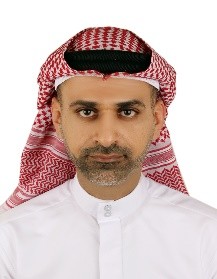
Abdulla Desmal (Senior Member, IEEE) received the B.S. degree in Electronics Engineering from the University of Bahrain (UOB), Isa Town, Bahrain, in 2009, and the M.S. and Ph.D. degrees in Electrical Engineering from King Abdullah University of Science and Technology (KAUST), Thuwal, Saudi Arabia, in 2010 and 2016, respectively.
From 2016 to 2017, he was a Postdoctoral Research Associate at Tufts University, Medford, MA, USA, and from 2017 to 2018, a Postdoctoral Research Fellow at Duke University, Durham, NC, USA.
He then served as an Assistant Professor at the Higher Colleges of Technology, UAE, from 2018 to 2024. Since 2024, he has been an Assistant Professor of Electrical Engineering at Bahrain Polytechnic, Isa Town, Bahrain, and in 2025, he was appointed Head of the Systems Engineering School (Power and Automation).
His research interests include efficient machine learning models, forward and inverse electromagnetic solvers, X-ray modeling for luggage screening and radiation therapy, and nonlinear optimization.
Since 2020, Dr. Desmal chaired the International Bioengineering Conference under the ASET Multi-Conference in Dubai.
He received the Rasheed Al-Deen Bin Al-Soori Award from UOB in 2015 for his outstanding academic achievements and was recognized as a Fellow of the Higher Education Academy (FHEA) in 2021.
He also authored two finalist papers in the student paper competitions at the 2014 IEEE Antennas and Propagation Society International Symposium and the 2014 Applied Computational Electromagnetics Society Conference.
Assistant Professor
Head of Systems Engineering School, Power and Automation
Bahrain Polytechnic
Advances in Machine Learning-Assisted Inverse Scattering Techniques
Click to view abstract
Inverse scattering problems (ISPs) involve determining medium characteristics from noisy scattered field measurements.
Over the past decade, significant progress has been made in this area, with a new wave of advances driven by machine learning (ML) approaches.
This workshop will classify ML algorithms for ISPs into direct and indirect training approaches.
Within the indirect category, two approaches will be introduced: on-system and off-system training.
Examples from each category will be presented and discussed.
These examples will cover a range of ML models, from multilayer perceptrons and convolutional neural networks (CNNs) to U-Nets, deep residual neural networks, and recently developed transformer architectures.